About निà¤à¥à¤à¤¿à¤¨à¤¾à¤®à¤¾à¤à¤¡ à¤à¤¡à¥à¤¨à¤¿à¤¨ डाà¤à¤¨à¥à¤¯à¥à¤à¥à¤²à¤¿à¤¯à¥à¤à¤¾à¤à¤¡ फà¥à¤°à¥ à¤à¤¸à¤¿à¤¡
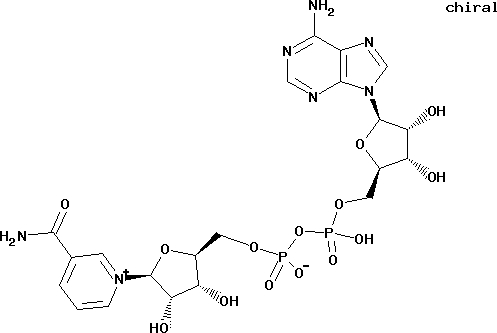
LC4085 Nicotinamide adenine dinucleotide free acid
for biochemistry NAD
Order number Packaging Quantity Price
AC31085
Glass bottle 1 g
27.23
AC31085
Glass bottle 5 g
108.90
AC31085
Glass bottle 25 g
437.40
Product information
Synonyms NAD free acid, DPN
Hill Formula C21H27N7O14P2
HS Code 2934 99 90
EC number 200-184-4
Molar mass 663.43 g/mol
Storage Store at +2C to +8C.
CAS number 98-92-0
Chemical and physical data
Solubility 10 g/l (20 C)
Melting point 140 - 142 C
Molar mass 663.43 g/mol
Bulk density 200 - 300 kg/m3
pH value 2.5 - 3.0 (10 g/l, H2O, 20 C)
Safety information
Storage class 10 - 13 Other liquids and solids
WGK WGK 1 slightly water endangering
Disposal 3
Relatively unreactive organic reagents should be collected in container A. If halogenated, they should be collected in container B. For solid residues use container C.
Transport information
Declaration (transport by sea) IMDG-Code No Dangerous Good
Declaration (transport by air) IATA-DGR No Dangerous Good
Specifications
Assay
- -NAD, enzymatically with ADH; calc. on anhydrous substance 95 %
- spectrophotometrically 58.7 - 59.3 %
Identity (IR-spectrum) 4.8 - 5.2 %
Appearance 22.7 - 23.3 %
pH (10 g/l, water) 12.7 - 13.3 %
Absorption maximum max (buffer pH 7.0) 259 - 261 nm
Spec. Absorptivity A 1%/1cm (7m7ax; 0,01 g/l; 1 cm;
buffer pH 7,0; calc. on anhydrous subst.) 255 - 270
Water (according to Karl Fischer) 7.0 %
Key Features of NAD Free AcidOur NAD free acid stands out for its high purity (>98%) and reliable solubility in water, making it essential for sensitive biochemical and cellular assays. The compound is light and moisture sensitive, ensuring long shelf life (24 months) when stored properly at -20C. It decomposes before melting and maintains a neutral pH in solution, matching the stringent requirements of laboratory and research protocols.
Diverse Applications in ResearchThis laboratory-grade NAD is vital for studies requiring precise enzyme cofactor activity, including enzymatic assays, cell metabolism, and molecular biology experiments. Its stability and consistent quality make it a trusted component in cell culture mediums, analytical methods like HPLC, and other research applications. The product is supplied in versatile and secure packaging to preserve its quality during storage and use.
FAQ's of Nicotinamide adenine dinucleotide free acid:
Q: How should Nicotinamide adenine dinucleotide (NAD) free acid be stored for maximum stability?
A: NAD free acid must be stored at -20C in a sealed bottle, away from light and moisture. These precautions help maintain its stability and extend its shelf life to up to 24 months.
Q: What are the primary applications of NAD free acid in laboratory research?
A: NAD free acid is primarily used as an enzyme cofactor in biochemical research, enzymatic assays, cell culture studies, and investigations of cell metabolism. Its high purity makes it suitable for various advanced molecular biology experiments.
Q: When is it necessary to use NAD free acid of >98% purity?
A: High-purity NAD is essential when precise enzymatic reactions or sensitive cellular studies are conducted, minimizing impurities that could interfere with experimental outcomes or data consistency.
Q: Where is this product manufactured and supplied from?
A: This NAD free acid is manufactured, exported, and supplied by reputable dealers, exporters, manufacturers, retailers, and traders based in India, ensuring global availability for research institutions.
Q: What process is used to determine the assay and purity of NAD free acid?
A: The purity and assay of NAD free acid are determined using High-Performance Liquid Chromatography (HPLC), ensuring accurate quantification and consistency across batches.
Q: How is the product packaged for safe transportation and storage?
A: The NAD free acid is packaged in sealed bottles, protecting it from exposure to light and moisture. It is classified as non-hazardous for transport and available in customizable sizes such as 1g, 5g, and 10g.
Q: What are the benefits of using NAD free acid in cell metabolism studies?
A: NAD is a crucial cofactor involved in cellular redox reactions and energy production, making it indispensable for studying metabolic pathways, enzymatic activity, and overall cell function in research applications.


 English
 Spanish
 French
 German
 Italian
 Chinese (Simplified)
 Japanese
 Korean
 Arabic
 Portuguese



 जांच भेजें





 जांच भेजें

 जांच भेजें


