(Furfurylamino) Purine About
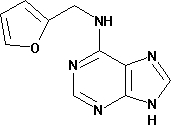
LC2919 6-(Furfurylamino)purine
for biochemistry
Order number Packaging Quantity Price
AC29919 Glass bottle 1 g 44.55
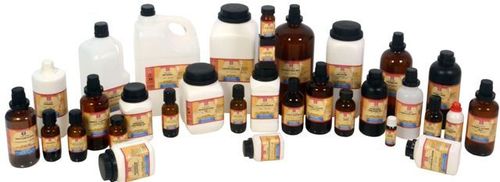
AC29919 Glass bottle
250 mg 37.35
Product information
Synonyms Kinetine, Furfuryladenine, Quinetine
Hill Formula C10H9N5O
HS Code 2934 99 90
EC number 208-382-2
Molar mass 215.21 g/mol
CAS number 525-79-1
Chemical and physical data
Solubility (20 C) practically insoluble
Melting point 265 - 270 C
Molar mass 215.21 g/mol
Bulk density 360 kg/m3
pH value 5.5 - 6.5 (10 g/l, H2O, 20 C) (filtered suspension)
Safety information
RTECS AU6270000
Storage class 10 - 13 Other liquids and solids
WGK WGK 1 slightly water endangering
Disposal 3
Relatively unreactive organic reagents should be collected in container A. If halogenated, they should be collected in container B. For solid residues use container C.
Specifications
Assay (HPLC) 99 %
Identity (IR-spectrum) passes test
Heavy metals (as Pb) 0.001 %
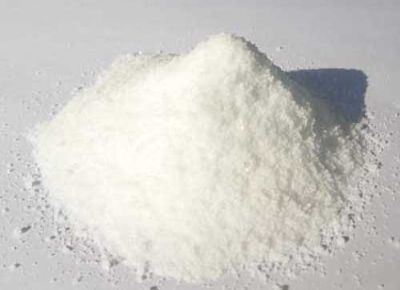
High Purity for Reliable Laboratory Use(Furfurylamino) Purine, supplied at 99% purity (HPLC), is tailored for academic and research laboratories. Each batch meets ACS/AR chemical standards to ensure consistency and dependability in scientific work. With its solid-state form and stable storage requirements, it's a trusted choice for plant tissue culture and experimental protocols.
Versatile Applications in Plant ScienceOften utilized as a plant growth regulator, Kinetin stimulates cell division and tissue differentiation, making it indispensable for tissue culture and propagation. Its efficacy in promoting shoot formation and delaying cellular aging has broadened its use in both fundamental studies and applied plant research.
Safe Handling and Convenient PackagingWith no hazardous classification, (Furfurylamino) Purine is safe for general laboratory handling and can be transported via air or road without special measures. It is available in secure bottle packaging, offered in sizes suitable for a variety of research demands, and boasts a long shelf life of 36 months when stored properly.
FAQ's of (Furfurylamino) Purine:
Q: How is (Furfurylamino) Purine typically used in the laboratory?
A: It is primarily used as a plant growth regulator to promote cell division and tissue differentiation in plant tissue culture experiments. Researchers may also use it in studies involving plant physiology and development.
Q: What is the recommended process for preparing solutions of this compound?
A: (Furfurylamino) Purine is slightly soluble in water, so it is best dissolved in solvents like DMSO or ethanol for higher concentration solutions. Always use analytical-grade solvents and prepare the solution freshly before use.
Q: When should (Furfurylamino) Purine be incorporated into plant tissue culture media?
A: It should be added during the preparation of media, typically before sterilization. This ensures even distribution and optimal effect on plant explants used in culture.
Q: Where should I store (Furfurylamino) Purine to maintain its quality?
A: Store the product in a tightly closed container, in a cool and dry place, away from direct sunlight, to preserve its stability and ensure the longest possible shelf life of 36 months.
Q: What are the key benefits of using this product in plant research?
A: Kinetin effectively stimulates shoot formation and cell division, improving regeneration rates and overall efficiency in plant tissue culture. Its high purity and stability contribute to reproducible and reliable results.
Q: How is the purity of (Furfurylamino) Purine verified?
A: Purity is confirmed through HPLC analysis, as well as by IR and NMR spectroscopy to ensure the correct chemical structure and high quality.
Q: Is special transport required for (Furfurylamino) Purine?
A: No, the compound is classified as non-hazardous and can be transported safely via air or road without special restrictions or precautions.


 English
 Spanish
 French
 German
 Italian
 Chinese (Simplified)
 Japanese
 Korean
 Arabic
 Portuguese










 Send Inquiry

 Send Inquiry


