Change Language
Bis (Trimethylsilyl) Trifluoroacetamide

Bis (Trimethylsilyl) Trifluoroacetamide

MOQ : 500 Millimeters

Bis (Trimethylsilyl) Trifluoroacetamide Specification

  • Shelf Life
  • 12 months
  • Physical State
  • Liquid
  • Melting Point
  • <0C
  • Ph Level
  • Not determined
  • Purity
  • 99.0%
  • Flash Point
  • 12C (closed cup)
  • Packaging Type
  • Sealed bottle
  • Molecular Formula
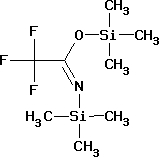
  • C8H18F3NOSi2
  • Storage Instructions
  • Store in a cool, dry place; keep container tightly closed
  • Density
  • 0.97 Gram per cubic centimeter(g/cm3)
  • Size
  • Customizable (commonly 5 mL, 25 mL, 100 mL)
  • Molecular Weight
  • 259.36 g/mol
  • Type
  • Silylation Reagent
  • Application
  • Derivatization reagent in gas chromatography
  • Appearance
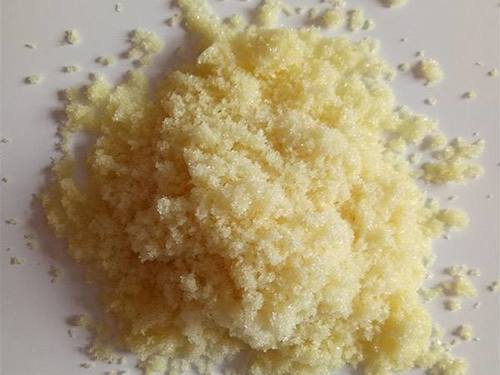
  • Clear colorless to pale yellow liquid
  • Purity(%)
  • 99.0


About Bis (Trimethylsilyl) Trifluoroacetamide

Bis (Trimethylsilyl) Trifluoroacetamide 

Commenced in the year 1962, we are recognized in the market as the most dependable manufacturer and exporter of Bis (trimethylsilyl) trifluoroacetamide. It is used as derivatives for hydroxyl and other stable trimethylsilyl group chemicals. To process this chemical, our diligent workforce uses quality grade compounds, sourced from trusted vendors. Bis (trimethylsilyl) trifluoroacetamide is also used for analytical purposes and as a reagent for chemical synthesis. We offer this chemical at market leading prices to clients.

Features:

  • Colorless and odorless

  • Low melting point

  • Excellent silylation reagent

Further Details: 

LC583 Bis (trimethylsilyl) trifluoroacetamide

Order number

Packaging

Quantity

Price

AC27583

Glass bottle

5 ml

35.325

AC27583

Glass bottle

25 ml

140.40


Product information

Synonyms

2,2,2-Trifluoro-N,O-bis(trimethylsilyl)acetamide

Hill Formula

C8H18F3NOSi2

HS Code

2931 00 99

EC number

247-103-9

Molar mass

257.40 g/mol

CAS number

25561-30-2


Chemical and physical data

Solubility

(20oC) Hydrolysis

Molar mass

257.40 g/mol

Density

0.97 g/cm3 (20oC)

Boiling point

145oC

Flash point

34oC


Safety information according to GHS

Hazard Statement(s)

H226: Flammable liquid and vapour.
H315: Causes skin irritation.
H319: Causes serious eye irritation.

Precautionary Statement(s)

P210: Keep away from heat.
P302 + P352: IF ON SKIN: Wash with plenty of soap and water.
P305 + P351 + P338: IF IN EYES: Rinse cautiously with water for several minutes. Remove contact lenses, if present and easy to do. Continue rinsing.

Signal Word

Warning

Hazard Pictogram(s)


Storage class

3 Flammable Liquids

WGK

WGK 2 water endangering

Disposal

3 Relatively unreactive organic reagents should be collected in container A. If halogenated, they should be collected in container B. For solid residues use container C.


Safety information

R Phrase

R 10 Flammable.

S Phrase

S 23-26 Do not breathe vapour.In case of contact with eyes, rinse immediately with plenty of water and seek medical advice.

Categories of danger

flammable, irritant

Hazard Symbol

Irritant

R Phrase

R 10 Flammable.

Categories of danger

flammable


Transport information

Declaration (transport by sea) IMDG-Code

UN 1993 FLAMMABLE LIQUID, N.O.S.(BIS(TRIMETHYLSILYL)-TRIFLUOROACETAMIDE), 3, III

Declaration (transport by air) IATA-DGR

UN 1993 FLAMMABLE LIQUID, N.O.S.(BIS(TRIMETHYLSILYL)-TRIFLUOROACETAMIDE), 3, III


Specifications

Assay (GC, area%)

 98 %

Identity (IR)

passes test


Versatile Silylation Reagent for Analytical Chemistry

BSTFA stands as a premier choice for analytical laboratories involved in gas chromatography. Its remarkable efficiency in converting polar compounds enhances volatility and detector response, making it invaluable for diverse sample matrices. With its high purity and reliable performance, BSTFA improves accuracy and reproducibility in qualitative and quantitative analyses.


Proper Handling and Storage

Due to its high reactivity and sensitivity to moisture, it is crucial to handle BSTFA with care. Always employ gloves, safety goggles, and use a fume hood during operations. Seal the container tightly after use and store in a cool, dry environment to maintain product stability and extend shelf life.

FAQs of Bis (Trimethylsilyl) Trifluoroacetamide:


Q: How should Bis (Trimethylsilyl) Trifluoroacetamide be used in sample preparation?

A: BSTFA is primarily used as a silylation reagent for derivatization in gas chromatography. Add it to your sample dissolved in an appropriate organic solvent, and allow the reagent to react with target functional groups. For best results, perform the process in a moisture-free environment to prevent hydrolysis.

Q: What protective measures are required when handling BSTFA?

A: Since BSTFA is highly flammable and can cause irritation, you should always wear gloves and safety goggles. Additionally, manipulation of the reagent should be done within a properly functioning fume hood to minimize inhalation exposure.

Q: When should BSTFA be used in analytical workflows?

A: BSTFA is ideal for use during the sample preparation stage in gas chromatography, especially when analytes need to be derivatized to improve volatility or detectability. Apply it immediately before analysis to ensure maximum efficacy.

Q: Where should BSTFA be stored to ensure its stability?

A: Store BSTFA in a tightly sealed, original bottle placed in a cool, dry location. Exposure to moisture can lead to hydrolysis, thus reducing reagent effectiveness, so minimize container openings and tightly close after each use.

Q: What are the main benefits of using BSTFA in gas chromatography?

A: BSTFA efficiently derivatizes polar functional groups, improving analyte volatility and enhancing chromatographic behavior. This leads to sharper peaks, better quantification, and increased sensitivity in analytical results.

Q: How long is the shelf life of BSTFA, and how can it be maximized?

A: BSTFA typically has a shelf life of 12 months when stored properly. To maximize its lifespan, ensure the bottle is tightly closed after each use and kept away from moisture and high temperatures.

Q: What is the process for safely disposing of BSTFA after use?

A: Dispose of BSTFA as hazardous laboratory waste according to institutional and local regulations. Do not pour unused reagent down the drain. Use appropriate waste containers and coordinate with your safety officer for disposal.

Tell us about your requirement
product

Price:

Quantity
Select Unit

  • 50
  • 100
  • 200
  • 250
  • 500
  • 1000+
Additional detail
Mobile number

Email

More Products in Laboratory Chemicals Category

18-CROWN-6-ETHER

18-CROWN-6-ETHER

Minimum Order Quantity : 100GM Kilograms

Purity(%) : 99%

Type : Other, Cyclic Polyether

Grade : LABARATORY GRADE

Application : Complexation of cations, phasetransfer catalyst, chemical research

CAS No : 17455139

1,2-NAPHTHOQUINONE-4- SULPHONIC  ACID SODIUM SALT AR

1,2-NAPHTHOQUINONE-4- SULPHONIC ACID SODIUM SALT AR

Minimum Order Quantity : 5GM Kilograms

Purity(%) : 99%

Type : Other, AR (Analytical Reagent)

Grade : LABARATORY GRADE

Application : Laboratory reagent, analytical chemistry, chemical synthesis

CAS No : 521244

BERYLLIUM OXIDE powder

BERYLLIUM OXIDE powder

Minimum Order Quantity : 5 Grams, ,

Purity(%) : 99.98%

Type : Other, Powder

Grade : Laboratory Grade

Application : Electronics, Ceramics, Nuclear reactors, Thermal management

CAS No : 1304569

BROMOCYCLOPETANE CHEMICAL

BROMOCYCLOPETANE CHEMICAL

Purity(%) : 98%

Type : Chemical, Other

Grade : Industrial Grade

Application : Pharmaceutical Intermediates, Agrochemicals, Organic Synthesis

CAS No : 1122896


We are deals in Lab Chemicals.
"Only deals in retail accepting orders upto 500ml only". 
trade india member
ALPHA CHEMIKA All Rights Reserved.(Terms of Use)
Developed and Managed by Infocom Network Private Limited.