About CRYSTAL VIOLET (gentian violet)
Crystal violet or gentian violet is a triarylmethane dye used as a histological stain and in Gram's method of classifying bacteria.
It has antibacterial, antifungal, antihelminthic, antiangiogenic, antitrypanosomal and antitumor properties. It was formerly important as a topical antiseptic. The medical use of the dye has been largely superseded by more modern drugs, although it is still listed by the World Health Organization.
Other names:
- Aniline violet
- Baszol Violet 57L
- Basic violet 3
- Brilliant Violet 58
- Methylrosanilide chloride
- Hexamethyl-p-rosaniline chloride
- Methyl Violet 10BNS
- Methyl Violet 10B
- Pyoktanin
Properties:
- CAS Number: 548-62-9
- Chemical formula: C25H30ClN3
- Molar mass: 407.99 gmol1
- Melting point: 205 C (401 F; 478 K)
Crystal Violet serves as a cornerstone in microbiological and histological staining protocols, renowned for its effectiveness in differentiating bacterial species and cell structures. With exceptional solubility in water and alcohols, it ensures precise and consistent results across a range of laboratory applications. Its high stability and long shelf life make it a cost-effective reagent for research, analysis, and routine clinical diagnostics.
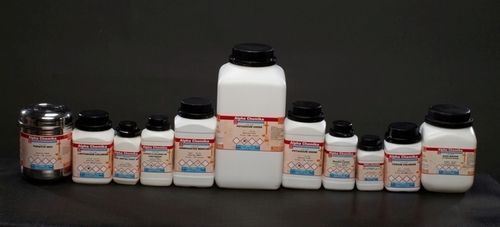
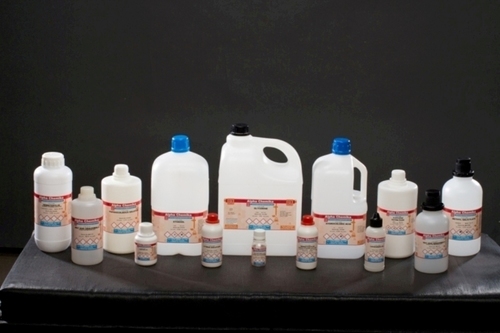
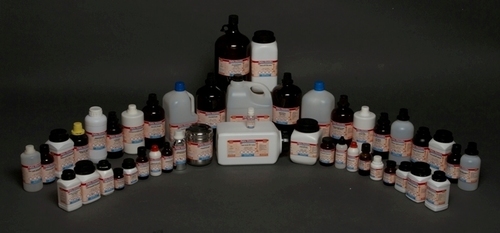
Safe Handling and Storage GuidelinesAlthough Crystal Violet is stable under proper storage, it is also sensitive to light exposure and should be kept in a cool, dry place away from direct sunlight. Proper precautions should be taken to avoid contact with skin, eyes, and respiratory system, as it can cause irritation. Authorized packaging options include bottles, drums, or custom containers to suit varied laboratory needs and scale of operation.
Sourcing and SupplyCrystal Violet is offered by leading dealers, exporters, manufacturers, retailers, suppliers, and traders based in India. Available in minimum orders of 100 grams, it meets a wide spectrum of institutional and industrial requirements. Laboratories can choose from various package sizes, ensuring both flexibility and value while sourcing a high-purity, laboratory-grade product.
FAQ's of CRYSTAL VIOLET (gentian violet):
Q: How should Crystal Violet be stored to maintain stability and effectiveness?
A: Crystal Violet should be stored in a cool, dry place away from direct sunlight, as it is sensitive to light and may fade if exposed. Keep containers tightly closed and use the original packaging or appropriate laboratory bottles to preserve stability and extend the reagent's shelf life.
Q: What are the primary uses of Crystal Violet in laboratories?
A: Crystal Violet is widely used as a staining agent in microbiology and histology for differentiating bacterial species and visualizing cell structures. It also finds use as a laboratory reagent and in certain medical applications due to its antiseptic properties.
Q: When is Crystal Violet preferred over other stains in microbiology?
A: Crystal Violet is a preferred choice for Gram staining procedures because of its ability to effectively bind to bacterial cell walls, allowing clear differentiation between Gram-positive and Gram-negative bacteria in biological samples.
Q: Where is Crystal Violet sourced and what packaging sizes are available?
A: Crystal Violet is primarily supplied by manufacturers, exporters, and traders in India. It is available in various packaging sizes, typically ranging from 25 grams to 1 kilogram, making it suitable for both small-scale and large laboratory requirements.
Q: What is the process for preparing a 1% Crystal Violet solution?
A: To prepare a 1% solution, dissolve 1 gram of Crystal Violet powder in 100 mL of either distilled water, ethanol, or methanol, as the dye is soluble in these solvents. This solution should exhibit a pH of approximately 3.0-4.0.
Q: What are the main benefits of using high-purity Crystal Violet in laboratory work?
A: Using Crystal Violet with 99% purity ensures minimal impurities (<0.5%), which translates to increased accuracy and reliability in staining procedures. Consistent purity reduces background interference and helps achieve reproducible results in research and clinical diagnostics.
Q: Is Crystal Violet hazardous to handle or transport?
A: Crystal Violet is not classified as hazardous for transport; however, it may cause irritation to the eyes, skin, and respiratory system. Always use appropriate personal protective equipment, such as gloves and eye protection, when handling the substance.


 English
 Spanish
 French
 German
 Italian
 Chinese (Simplified)
 Japanese
 Korean
 Arabic
 Portuguese








 Send Inquiry

 Send Inquiry


