About Diphenyl acetonitrile
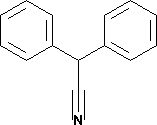
LC1796 Diphenylacetonitrile
for synthesis
Order number Packaging Quantity Price
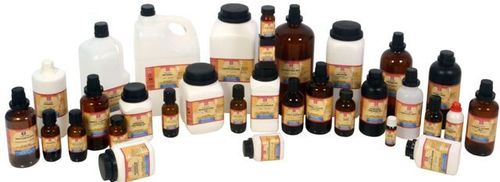
AC28796 Plastic bottle 100 g
18.45
Product information
Synonyms Benzhydryl cyanide, Diphenylmethyl cyanide
Hill Formula C14H11N
Chemical formula (C6H5)2CHCN
HS Code 2926 90 95
EC number 201-662-5
Molar mass 193.24 g/mol
CAS number 86-29-3
Chemical and physical data
Solubility (20 C) insoluble
Melting point 71 - 74 C
Molar mass 193.24 g/mol
Boiling point 175 - 177 C (15 hPa)
Vapor pressure 21.3 hPa (190 C)
Flash point 120 C
Safety information
RTECS AL9800000
Storage class 10 - 13 Other liquids and solids
WGK WGK 2 water endangering
Disposal 3
Relatively unreactive organic reagents should be collected in container A. If halogenated, they should be collected in container B. For solid residues use container C.
Transport information
Declaration (transport by sea) IMDG-Code No Dangerous Good
Declaration (transport by air) IATA-DGR No Dangerous Good
Toxicological data
LD 50 oral LD50 rat 3500 mg/kg
Specifications
Assay (GC, area%) 99 %
Melting range
- lower value 71 C
- upper value 74 C
Identity (IR) passes test
Exceptional Purity and StabilityWith a minimum purity of 99% and excellent stability under recommended storage conditions, Diphenyl acetonitrile is ideal for demanding applications in pharmaceutical and organic synthesis. Its long shelf life and resistance to degradation ensure consistent performance for industrial use.
Versatile Applications in SynthesisDiphenyl acetonitrile is valued as a crucial intermediate in the manufacture of pharmaceuticals and other chemicals. Its solubility in common organic solvents supports various reaction processes, making it a staple for research, development, and large-scale production environments.
User-Friendly Storage and HandlingThis compound is odorless and classified as non-hazardous, offering safe handling and storage. It should be kept in a cool, dry, well-ventilated place, protected from light to preserve its quality. Its non-regulated transport status simplifies logistics for international and domestic shipments.
FAQ's of Diphenyl acetonitrile:
Q: How should Diphenyl acetonitrile be stored for maximum shelf life?
A: Store Diphenyl acetonitrile in a cool, dry, and well-ventilated area, away from direct light. Under these conditions, it maintains stability and effectiveness for up to 2 years.
Q: What are the main uses and benefits of Diphenyl acetonitrile?
A: Diphenyl acetonitrile is primarily used as an intermediate in organic synthesis, particularly in the production of pharmaceuticals. Its high purity and stability contribute to efficient reaction yields and reliable product quality.
Q: When is Diphenyl acetonitrile typically utilized in production processes?
A: It is commonly used during the intermediate stages of pharmaceutical and fine chemical manufacturing, where its solubility in organic solvents allows for versatile applications.
Q: Where can Diphenyl acetonitrile be sourced and in what quantities?
A: Diphenyl acetonitrile is available in India from dealers, exporters, manufacturers, retailers, suppliers, and traders. Custom packaging and sizing options are offered to meet diverse industry requirements.
Q: What is the recommended process for handling Diphenyl acetonitrile safely?
A: Although classified as non-hazardous under normal use, it is advisable to handle Diphenyl acetonitrile with standard industrial safety protocols, such as wearing gloves and protective eyewear, especially when handling large quantities.
Q: How is Diphenyl acetonitrile transported and is it regulated?
A: Diphenyl acetonitrile is not considered a dangerous good for transport, simplifying shipping and logistics both domestically and internationally.


 English
 Spanish
 French
 German
 Italian
 Chinese (Simplified)
 Japanese
 Korean
 Arabic
 Portuguese








 Send Inquiry

 Send Inquiry


