About Benzyl Thiocyanate
In the last few years we have established ourselves as one of the most prominent organizations engaged in offering Benzyl Thiocyanate. We use optimum quality compounds, sourced from trusted vendors to process this chemical. It is used as catalyst for analytical chemistry and also as chemical synthesis. Our chemical is widely used in chemical, pharmaceutical, fertilizer and food industry. Benzyl Thiocyanate is packed in glass bottles to ensure safe transportation. We offer this chemical at market leading prices to clients.
Features:
- Extended shelf life
- Low melting point
- Accurate composition
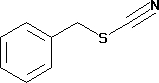
LC839 Benzyl thiocyanate for synthesis
| Order number | Packaging | Quantity | Price |
| AC27839 | Glass bottle | 250 g | 40.05 |
| Product information |
| Synonyms | Thiocyanic acid benzyl ester, Benzyl rhodanide |
| Hill Formula | C8H7NS |
| Chemical formula | C6H5CH2SCN |
| HS Code | 2930 90 99 |
| EC number | 221-144-2 |
| Molar mass | 149.21 g/mol |
| Storage | Store below +15°C. |
| CAS number | 3012-37-1 |
| Chemical and physical data |
| Solubility | 0.1 g/l (20 °C) |
| Melting point | 38 - 41 °C |
| Molar mass | 149.21 g/mol |
| Density | 1.32 g/cm3 (20 °C) |
| Boiling point | 230 °C |
| Flash point | 110 °C |
| Safety information |
| R Phrase | R 20/21/22-32-52/53
Harmful by inhalation, in contact with skin and if swallowed.Contact with acids liberates very toxic gas.Harmful to aquatic organisms, may cause long-term adverse effects in the aquatic environment. |
| S Phrase | S 13-61
Keep away from food, drink and animal feedingstuffs.Avoid release to the environment. Refer to special instructions/ Safety data sheets. |
| Categories of danger | harmful, dangerous for the environment |
| Hazard Symbol | Harmful |
| RTECS | XK8155000 |
| Storage class | 10 - 13 Other liquids and solids |
| WGK | WGK 2 water endangering |
| Disposal | 6
Sulfides and sulfites as well as other reducing substances, inorganic cyanides and isonitriles: Stir into sodium hypochlorite solution (Cat. No. 105614) and, if necessary, leave to react for several days. Caution: some substances may show a violent reaction! Draw off any toxic or flammable gases that may be formed. Excess oxidant should be neutralized with sodium thiosulfate (Cat. No. 106513). Container D or E. |
| Transport information |
| Declaration (transport by sea) IMDG-Code | UN 2811 TOXIC SOLID, ORGANIC, N.O.S.(BENZYLTHIOCYANATE), 6.1, III |
| Declaration (transport by air) IATA-DGR | UN 2811 TOXIC SOLID, ORGANIC, N.O.S.(BENZYLTHIOCYANATE), 6.1, III |
| Specifications |
| Assay (GC, area%) | 98 % |
| Melting range
- lower value | 38 °C |
| - upper value | 41 °C |
| Identity (IR) | passes test |
Key Characteristics and StabilityBenzyl Thiocyanate is a clear to pale yellow liquid with a distinctive odor. It remains stable under standard storage conditions and has a shelf life of two years. The compound offers over 98% purity, making it reliable for precision applications. Its low vapor pressure and high flash point (>110C) ensure easier handling compared to many volatile chemicals.
Packaging and Storage SolutionsThe product is typically supplied in sturdy HDPE bottles or drums, which safeguard it from contamination and moisture. The recommended storage involves maintaining it in a cool, well-ventilated area, away from incompatible substances to preserve quality and mitigate hazardous decomposition.
Main Applications and Industry UseBenzyl Thiocyanate is primarily deployed as a laboratory reagent and serves as an essential intermediate in the synthesis of pharmaceuticals and other organic compounds. Its solubility in organic solvents broadens its applicability, while its purity offers consistent, repeatable results in chemical research and synthesis processes.
FAQs of Benzyl Thiocyanate:
Q: How should Benzyl Thiocyanate be safely handled and stored?
A: Benzyl Thiocyanate should be handled with adequate ventilation and care to avoid skin and eye contact. Store it in well-sealed HDPE bottles or drums in a cool, dry, and well-ventilated area. Ensure it is kept away from heat sources and incompatible materials to prevent decomposition and hazardous gas emission.
Q: What are the primary uses of Benzyl Thiocyanate in industry and laboratories?
A: This chemical is often used as an intermediate in organic synthesis, particularly for pharmaceuticals and specialized chemical research. Its high purity and solubility in organic solvents make it ideal for laboratory reagent use and for synthesizing complex molecules.
Q: When should decomposition safety concerns arise with Benzyl Thiocyanate?
A: Decomposition is a concern when the product is exposed to elevated temperatures or hazardous conditions. This can lead to the release of toxic gases such as hydrogen cyanide, nitrogen oxides, and sulfur oxides. Proper storage and handling minimize these risks.
Q: Where is Benzyl Thiocyanate typically distributed and who supplies it?
A: Benzyl Thiocyanate is supplied throughout India by a network of dealers, exporters, manufacturers, retailers, suppliers, and traders. It is available in various packaging options tailored to industrial and laboratory requirements.
Q: What benefits does Benzyl Thiocyanate offer for organic synthesis?
A: With over 98% purity and compatibility with organic solvents, Benzyl Thiocyanate enables precise and efficient reactions in organic synthesis. Its stability and ease of handling also enhance laboratory safety and research accuracy.
Q: How should accidental skin or eye contact with Benzyl Thiocyanate be managed?
A: In case of skin or eye contact, immediately rinse the affected area with copious amounts of water and seek medical assistance. Always use appropriate personal protective equipment like gloves and goggles during handling to prevent exposure.


 English
 Spanish
 French
 German
 Italian
 Chinese (Simplified)
 Japanese
 Korean
 Arabic
 Portuguese








 Send Inquiry

 Send Inquiry


