Silver Acetate About
CERTIFICATE OF ANALYSIS
| Name Of Item : SILVER ACETATE (for synthesis) | | Formula : Ag |
| M.W. : 107.87 | | Batch No. : S0093 |
| CAS NO. : 563-63-3 | | | Cat. No. : AL4005 00100 |
| Date Of Mfg. : | | | Date of Analysis : |
| | | | |
| Type Of Test | Standard | | Observed |
| Description | White or off-white powder | | White or off-white powder |
| Assay | Min. 98.0% | | 98.53% |
Results : The above product complies with LR grade
Key Properties and StabilitySilver Acetate is odorless and presents as a white or off-white crystalline powder. It is light sensitive, decomposing upon exposure to light or high temperatures. For safety and longevity, storage in tightly sealed containers away from light is crucial. Its neutral to slightly acidic nature makes it applicable in sensitive chemical and analytical procedures.
Main Applications and UsagePrimarily used in laboratory settings, Silver Acetate serves as a reagent for analytical chemistry, organic synthesis, and as an antiseptic. It is valued for its ability to introduce silver into compounds and for its antimicrobial properties. It is also utilized in research and development across educational, industrial, and medical sectors.
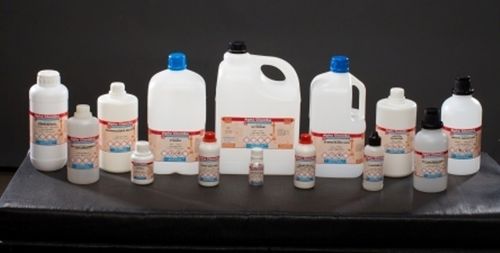
Handling and Safety ConsiderationsWhile Silver Acetate is not regulated under the UN transport numbers, it remains toxic if ingested and may cause allergic skin reactions. Proper protective measures, including wearing gloves and working in a well-ventilated area, are essential. Store the compound in HDPE bottles as provided, and avoid contact with incompatible substances like strong acids, bases, and reducing agents.
FAQ's of Silver Acetate:
Q: How should Silver Acetate be stored to ensure maximum stability?
A: Silver Acetate should be stored in a cool, dry place, away from direct light, preferably in tightly sealed HDPE bottles. Exposure to light can lead to decomposition, so keeping it in darkness helps maintain its stability and prolongs its shelf life up to two years.
Q: What are the main applications of Silver Acetate in laboratories?
A: Silver Acetate is mainly used as a reagent in analytical chemistry, in organic synthesis for introducing silver into compounds, and for its antimicrobial properties. It is also used in research and development as well as in antiseptic applications.
Q: When handling Silver Acetate, what safety precautions should be observed?
A: Always wear gloves and work in a well-ventilated environment. Avoid skin and eye contact, as it may cause allergic reactions and is toxic if ingested. Ensure Silver Acetate is kept away from incompatible substances such as strong acids, bases, and reducing agents.
Q: Where is Silver Acetate typically supplied and who are its main users?
A: Silver Acetate is supplied to laboratories, educational institutions, and research facilities. Its main users include chemists, scientists, and laboratory technicians involved in chemical analysis and organic synthesis. It is distributed by dealers, exporters, manufacturers, retailers, suppliers, and traders in India and worldwide.
Q: What benefits does Silver Acetate offer in organic synthesis?
A: In organic synthesis, Silver Acetate facilitates the introduction of the silver ion into organic molecules, enabling unique chemical transformations and providing access to silver-containing compounds, which are valuable in medicinal chemistry and material science.
Q: How is Silver Acetate typically used in antimicrobial applications?
A: Silver Acetate is valued for its antimicrobial action and is used in laboratory antimicrobial tests, as well as occasionally in formulations designed to inhibit bacterial growth, provided protocols are followed to ensure safety due to its toxicity.


 English
 Spanish
 French
 German
 Italian
 Chinese (Simplified)
 Japanese
 Korean
 Arabic
 Portuguese








 Send Inquiry

 Send Inquiry


