Tetrahydrofuran for HPLC About
Initially, Tetrahydrofuran was used for High-performance liquid chromatography as a mobile phase solvent. Its strength is similar to that of acetonitrile, infact, slightly higher than it. As it is an ether, it is easily miscible in water, finding application in the reverse phase of HPLC. This compound renders additional options to have ternary mixes, during incapability of combination of water and methanol or water with acetonitrile for producing a fine tuned separation. Moreover, in analytical chemistry it finds application for separating, quantifying and identifying each component in a particular mixture.
Technical Specifications of Tetrahydrofuran for HPLC & Spectroscopy
- C4H8O M.W. 72.11 500 ml
- Assay(GC) 99.8% 1 Ltr
- Maximum Limits of Impurities : 2.5 Ltr
- Non-volatile matter 0.0001%
- Peroxides 0.01%
- Acidity(CH3COOH) 0.001%
- Water 0.05%
- Maximum absorbance in a 1.0 cm cell against water at:
- 230 nm 1.00
- 240 nm 0.40
- 250 nm 0.20
- 270 nm 0.10
- 300 nm 0.02
- 350 nm 0.01
- Physical Data
- Boiling point(760mm Hg) 66oC
- Refractive index(n 20o/D) 1.407
- Viscosity(20oC) 0.55cP
- Density(d 20o/4) 0.889
- Flash point -180C
- Polarity index(P1) 4.2
- Selectivity group III
- Cas No: 109-99-9 Un No. 3.1/2056 TARIFF : 2832 11 00
- R : 11-19-36/37 S : 16-29-33 F : 1
Optimized for HPLC and Analytical ApplicationsTetrahydrofuran for HPLC delivers exceptional purity and consistency, meeting strict laboratory and analytical standards. Its high volatility and excellent solvent properties make it ideal for use as an eluent or mobile phase, ensuring sharp chromatographic separation and reproducible results. With controlled peroxide levels and minimal water content, it supports reliable and accurate analysis.
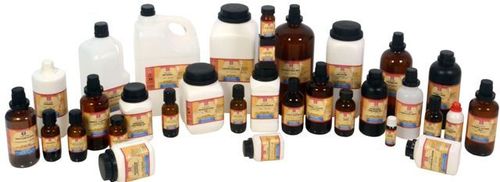
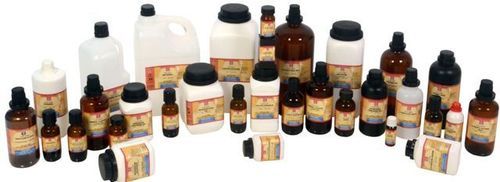
Safe Handling and Storage GuidelinesDue to its high flammability and ability to form explosive peroxides, THF should be handled with care. Store the solvent tightly closed in a cool, dry, and well-ventilated area away from heat, open flames, or oxidizers. Amber bottles in sizes from 500 ml to 2.5 L offer protection against light-induced degradation. Always follow recommended laboratory safety protocols when working with THF.
FAQ's of Tetrahydrofuran for HPLC:
Q: How should Tetrahydrofuran for HPLC be properly stored to maintain stability and safety?
A: Tetrahydrofuran should be stored tightly closed in a cool, dry, and well-ventilated area, away from sources of ignition and strong oxidizers. Using amber bottles helps protect from light, while BHT stabilizer and controlled peroxide levels further enhance safety during storage.
Q: What is the recommended use of Tetrahydrofuran in HPLC applications?
A: THF is commonly used as an eluent or mobile phase in High Performance Liquid Chromatography (HPLC), thanks to its excellent solvency power and miscibility with water and organic solvents, enabling effective separation and analysis of various compounds.
Q: When should THF be replaced or disposed of in the laboratory?
A: THF should be replaced if it develops a yellow tint, shows signs of peroxide formation, or has exceeded its recommended shelf life of 36 months from the date of manufacture. Always test for peroxides before disposal or reuse.
Q: Where can Tetrahydrofuran for HPLC be used most effectively?
A: This solvent is best suited for university and research laboratories, dealer, exporter, manufacturer, retailer, supplier, and trader settings where high-purity solvents are required for HPLC, analytical chemistry, and general laboratory procedures.
Q: What safety precautions should be taken when using THF?
A: Ensure work is conducted in a well-ventilated area, avoid inhalation and contact with skin or eyes, and keep away from open flames or heat sources. Personal protective equipment such as gloves, goggles, and lab coats should be worn at all times.
Q: How does using high-purity THF benefit my chromatographic analysis?
A: Using high-purity THF (99.9%) helps minimize interference, enhances resolution, and ensures more reliable and reproducible chromatographic results by reducing impurities and background noise during analysis.


 English
 Spanish
 French
 German
 Italian
 Chinese (Simplified)
 Japanese
 Korean
 Arabic
 Portuguese










 Send Inquiry

 Send Inquiry


