POTASSIUM HYDROGEN PHTHALATE (potassium biphthalate) About
POTASSIUM HYDROGEN PHTHALATE FOR HPLC
C8H5KO4 M.W.204.22
Assay(Min) 99.5%
Filter Test In accordance
Solubility(100 mg/ml in H2O)Complete, colourless
pH 3.5-5.0
Absorption(10% H2O)
: 330nm Amax : < 0.05
: 340 nm Amax : < 0.03
: 350 nm Amax : < 0.02
: 500 nm Amax : < 0.02
Cas No. 877-24-7 Un No :NR TARIFF : 2917 39 90
S : 22-24/25 F: 3
Exceptional Purity and ConsistencyKHP boasts an impressive purity of 99.5%, making it suitable for use as a primary standard in analytical chemistry. Its high level of consistency ensures that laboratory calibrations and buffer solutions maintain exceptional accuracy, supporting reliable experimental data and results.
Safe and Reliable Laboratory UseClassified as non-hazardous and non-flammable, Potassium Hydrogen Phthalate is safe for routine laboratory handling. Its stable, odor-free, solid state and excellent solubility in water make it convenient for preparing buffer solutions or conductivity standards in research and industrial labs.
Manufactured to Stringent StandardsOur KHP is produced under strict ISO 9001:2015 certified processes, meeting rigorous quality and safety guidelines. Each batch is controlled for impurities, such as ensuring minimal lead content (<0.0005%), guaranteeing the highest standards for analytical and calibration needs.
FAQ's of POTASSIUM HYDROGEN PHTHALATE (potassium biphthalate):
Q: How is Potassium Hydrogen Phthalate (KHP) typically used in laboratory settings?
A: KHP serves as a primary standard for calibrating pH meters and for preparing buffer solutions. It is also widely used to calibrate conductivity meters due to its consistent solubility and pH properties, ensuring accurate instrumentation in laboratory analyses.
Q: What are the storage requirements for Potassium Hydrogen Phthalate?
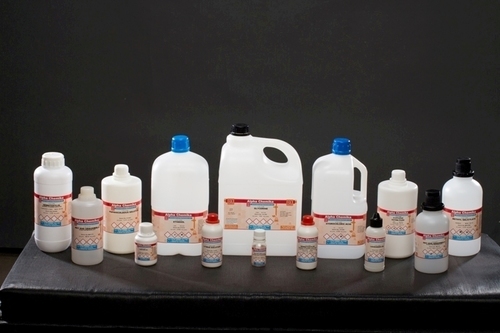
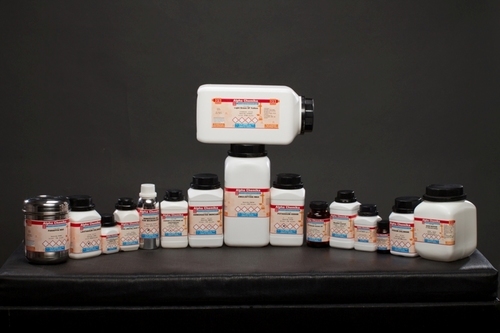
A: Potassium Hydrogen Phthalate should be stored tightly closed in a cool, dry environment to preserve its stability and purity. It is packaged in HDPE bottles or polybags, which help prevent contamination and moisture exposure.
Q: When should KHP be used as a conductivity standard?
A: KHP is recommended as a conductivity standard during the calibration of analytical instruments due to its reliable and high purity (99.5%). Its stability and well-established properties make it ideal for routine calibration procedures in quality control and research labs.
Q: What are the benefits of using KHP as an analytical reagent?
A: Using KHP ensures precise and repeatable results, as it is a high-purity, stable, and water-soluble compound. Its inertness and safety classification help minimize error and hazard in laboratory environments, supporting accurate quantitative analysis.
Q: Where is Potassium Hydrogen Phthalate manufactured and supplied from?
A: This product is manufactured under ISO 9001:2015 certification and is available from reputable dealers, exporters, manufacturers, retailers, suppliers, and traders across India.
Q: What is the preferred process for preparing KHP buffer solutions?
A: To prepare KHP buffer solutions, dissolve the required amount of KHP in deionized water, adjusting the solution volume to achieve the desired molarity. The process should be conducted with analytical precision to maintain buffer integrity and consistent pH values.


 English
 Spanish
 French
 German
 Italian
 Chinese (Simplified)
 Japanese
 Korean
 Arabic
 Portuguese








 Send Inquiry

 Send Inquiry


