


 English
 Spanish
 French
 German
 Italian
 Chinese (Simplified)
 Japanese
 Korean
 Arabic
 Portuguese


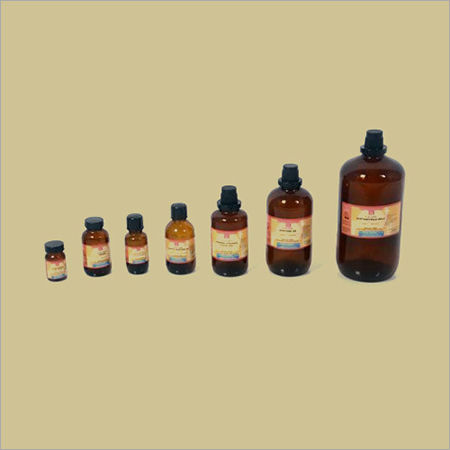
It is a commonly used chemical reagent and is one of the strong acid that ionizes in an aqueous solution. Having rich experience and thorough understanding of the market operations, we are engaged in offering Hydriodic Acid. We process this chemical under the firm guidance of expert supervisors using best quality compounds. It has strong reducing ability and acidity, commonly used to produce acetic acid. Hydriodic Acid is also used for processing pharmaceutical medicines for treating chronic bronchitis, scrofula and malarial infections. We offer this chemical at cost effective prices.
Features :
Composition :
| Tests | Specifications | Results |
| Description | Colourless to brown fuming liquid | Colourless to brown fuming liquid |
| Assay (Min) | 55.0% | 55.93% |
| Arsenic (As) | <5ppm | <5ppm |
| Chloride &bromide (as Cl) | <0.05% | <0.05% |
| Heavy metals (as Pb) | <0.001% | <0.001% |
| Iron (Fe) | <0.001% | 0.0005% |
| Stabilizer (H3PO2) | <1.5% | <1.5% |
| Sulphate (SO4) | <0.005% | <0.005% |

Price:
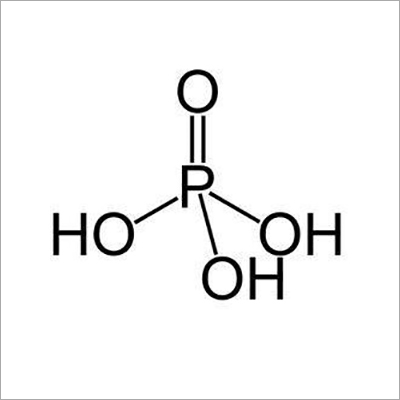
Usage : Laboratory Analytical Reagent, Pharmaceuticals, Food Industry (with caution)
Smell : Other, Odorless
HS Code : 28092010
Density : 1.684 Gram per cubic centimeter(g/cm3)
Application : Analytical Reagent, Laboratory Use, Chemical Synthesis
Solubility : Miscible with Water
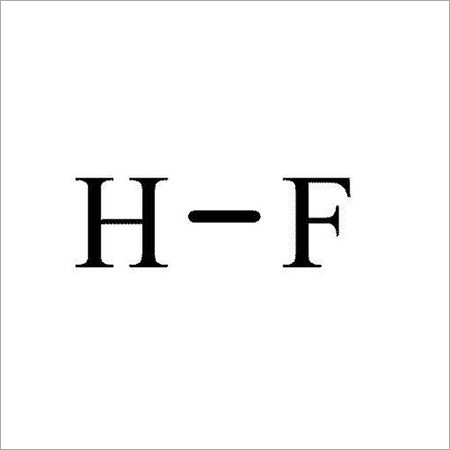
Usage : Used as an industrial reagent, in etching glass, cleaning metals, and in other specialized chemical applications
Smell : Other, Pungent, Irritating Odor
HS Code : 28111100
Density : 1.13 Gram per cubic centimeter(g/cm3)
Application : Glass Etching, Metal Cleaning, Electronics Industry, Chemical Synthesis
Solubility : Miscible with Water

Usage : Industrial, Laboratory, Agriculture
Smell : Other, Pungent, stinging
HS Code : 29151200
Density : 1.22 Gram per cubic centimeter(g/cm3)
Application : Preservatives, Textile, Leather, Rubber, Pharmaceuticals, Agriculture, Silage
Solubility : Miscible with water, alcohol, ether, acetone, and glycerol
Usage : Used as a precursor to various other organic compounds, especially in the synthesis of perfumes, flavorings, dyes, and pharmaceuticals
Smell : Other, Characteristic almondlike odor
HS Code : 2912.21.00
Density : 1.044 Gram per cubic centimeter(g/cm3)
Application : Pharmaceutical Intermediates, Perfume and Flavor Industry, Dye and Chemical Synthesis
Solubility : Slightly soluble in water, soluble in alcohol and ether



|
 |
ALPHA CHEMIKA
All Rights Reserved.(Terms of Use) Developed and Managed by Infocom Network Private Limited. |

 Send Inquiry

 Send Inquiry


