ADENINE About
Specifications:Sr no. | Tests | Specifications | Results |
1 | Description | White powder | White powder |
2 | Assay (Min.) | 99% | 99.20% |
3 | Melting point | <300C | 300C |
4 | Heavy metals (as Pb) | <0.001% | <0.001% |
Additional Information:
- Minimum Order Quantity: 25 Gram
Key Features and StabilityAdenine demonstrates excellent stability when stored under recommended conditions, remaining effective for up to three years. The compound is odorless, appears as a white to off-white crystalline powder, and maintains its structure at high temperatures, decomposing at 360C.
Applications in Research and IndustryAdenine's high purity makes it ideal for use in laboratory research, pharmaceutical synthesis, and various biochemical applications. As an essential compound, it serves as an intermediate in pharmaceuticals and supports advancements in molecular biology studies.
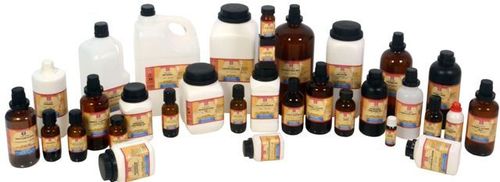
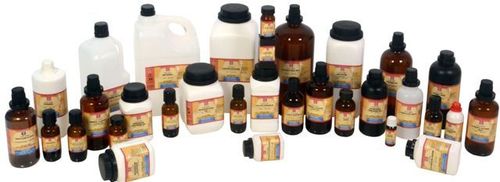
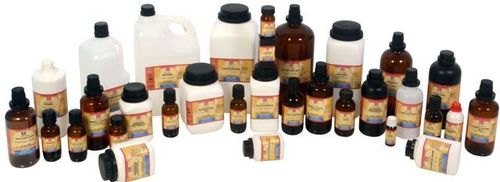
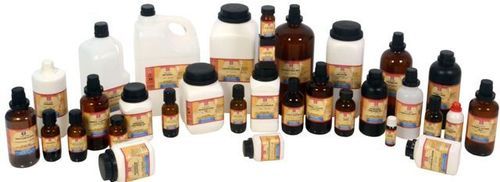
Safe Handling and Versatile PackagingClassified as non-hazardous, adenine requires no special hazard precautions. Store in closed bottles or drums, in a cool, dry place, away from light. Customized packaging sizes ensure convenience for dealers, exporters, manufacturers, and other industry professionals.
FAQ's of ADENINE:
Q: How should adenine be stored to maintain its stability and shelf life?
A: Adenine should be stored in a tightly closed container, in a cool and dry environment, away from direct light. When these conditions are followed, the substance remains stable and retains its quality for up to three years.
Q: What are the common applications of adenine in pharmaceutical and research industries?
A: Adenine is primarily used as an intermediate in pharmaceutical synthesis, as well as in biochemical studies and molecular biology research. Its high purity ensures reliable results in both experimental and industrial applications.
Q: When is adenine typically used during the research or manufacturing process?
A: Adenine is incorporated during stages where nucleic acid analogs or precursors are required, especially in the synthesis of pharmaceuticals and in biochemical assays involving DNA or RNA.
Q: Where does adenine find its primary market and distribution?
A: Adenine is widely supplied and traded by dealers, exporters, manufacturers, retailers, suppliers, and traders in India and internationally. Its reliable quality and packaging options cater to diverse research and industrial sectors.
Q: What is the process for using adenine in biochemical studies or pharmaceutical synthesis?
A: Adenine is measured according to experimental requirements and dissolved in suitable solvents-typically dilute acids, due to its solubility profile-for integration in reactions or assays pertinent to pharmaceutical and molecular biology research.
Q: How safe is adenine to handle in laboratory and industrial environments?
A: Adenine is classified as non-hazardous and poses minimal risk under normal handling. Standard laboratory practices, such as avoiding inhalation and contact with skin, are sufficient for safe use.
Q: What are the primary benefits of using laboratory-grade adenine with 99% purity?
A: Using high-purity, laboratory-grade adenine ensures accurate, reproducible results in sensitive research, pharmaceutical synthesis, and biochemical applications. Its stability, reliability, and adaptability in packaging formulate additional advantages for professionals.


 English
 Spanish
 French
 German
 Italian
 Chinese (Simplified)
 Japanese
 Korean
 Arabic
 Portuguese










 Send Inquiry

 Send Inquiry


