


 English
 Spanish
 French
 German
 Italian
 Chinese (Simplified)
 Japanese
 Korean
 Arabic
 Portuguese


| Type Of Test | Standard | Observed |
| Description | Dark green colored powder | Dark green colored powder |
| Absorption maxima 1 | ||
| (methanol) | About 651 nm | 651nm |
| Absorption maxima 2 | ||
| (methanol) | About 523 nm | 524nm |
| Loss on drying (105oC) | <10% | 8.70% |
Giemsa Stain is used in Giemsa banding, commonly called G-banding, to stain chromosomes & often used to create a karyogram. It can identify chromosomal aberrations such as rearrangements & translocations.
Results : The above product complies with LR grade
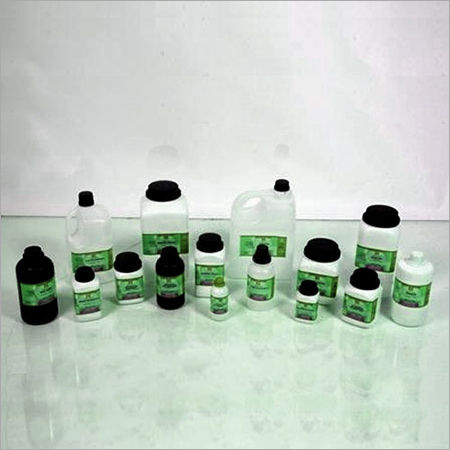

Price:
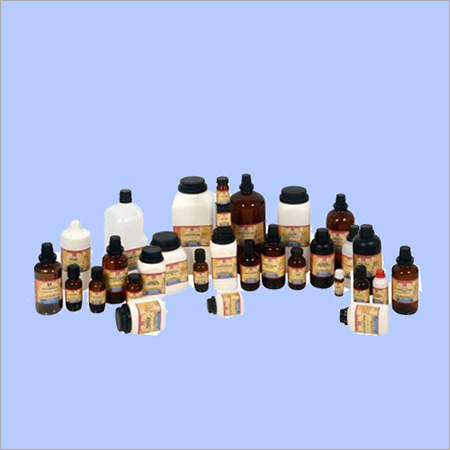
Price 3577 INR / Gram
Minimum Order Quantity : 500 Grams
Grade : Laboratory Grade
Physical State : Powder
Storage Instructions : Store in a cool and dry place, away from sunlight
Application : Laboratory, Textile and Biological Staining
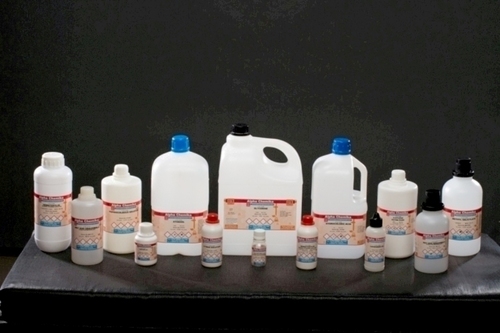
Minimum Order Quantity : 25GM Kilograms
Grade : Laboratory Grade
Physical State : Solid
Storage Instructions : Store in a cool, dry place, away from light
Application : Analytical reagent, Biological Staining, Pharmaceuticals, Food Coloring
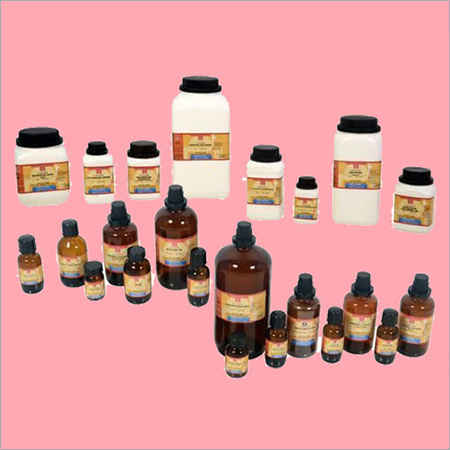
Price 2132 INR / Gram
Minimum Order Quantity : 500 Grams
Grade : Laboratory Grade
Physical State : Solid
Storage Instructions : Store in cool, dry place, away from light
Application : Biological stain, dye in labs
Minimum Order Quantity : 5 GM Kilograms
Grade : Laboratory Grade
Physical State : Powder
Storage Instructions : Store in a cool, dry place; Keep container tightly closed
Application : Microscopy staining and sample preparation



|
 |
ALPHA CHEMIKA
All Rights Reserved.(Terms of Use) Developed and Managed by Infocom Network Private Limited. |

 Send Inquiry

 Send Inquiry


