About Silver Carbonate
Our vision to excel and establish a strong foothold in the market has assisted us to evolve as a prominent organization engaged in offering pure Silver Carbonate. It is used for the production of silver powder for use in microelectronics. Offered chemical is also used as a reagent for organic synthesis. Silver Carbonate reacts with ammonia to give the explosive silver fulminate. We offer this chemical at market leading prices to clients.
Features:
- Pale yellow crystals
- Low melting point
- Poorly soluble in water
CERTIFICATE OF ANALYSIS
| Name Of Item : SILVER CARBONATE EP | Formula : Ag2CO3 |
| M.W. : 275.75 | Batch No. : S0096 |
| CAS NO. : 534-16-7 | Cat. No. : AL4007 00100 |
| | |
| Type Of Test | Standard | Observed |
| | | |
| Description | Greenish yellow powder | Greenish yellow powder |
| Assay | (Min.) 99% | 99.32% |
| Nitrate (NO3) | <0.05% | 0.04% |
| Chloride (Cl) | <0.005% | 0.0032% |
| Arsenic (As) | <0.0001% | <0.0001% |
| Lead (Pb) | <0.003% | 0.002% |
| Iron (Fe) | <0.002% | <0.002% |
| Loss on drying at 105oC | <0.2% | <0.2% |
Results : The above product complies with EP grade
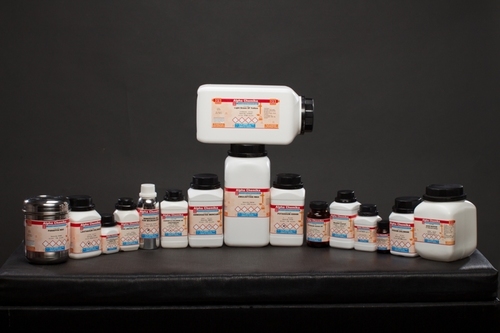
High Purity Laboratory Grade Silver CarbonateOur Silver Carbonate is provided at an exceptional purity of 99.32%, making it highly suitable for various analytical chemistry and laboratory synthesis requirements. Its finely powdered, amorphous texture ensures consistent reactivity and accurate results. The compound's greenish yellow color and lack of odor make it convenient and recognizable for precise laboratory work and silver salt manufacturing.
Safe Handling and Storage RecommendationsSilver Carbonate requires careful handling due to its harmful nature if ingested and its tendency to cause skin and eye irritation. Always wear appropriate protective gear and ensure adequate ventilation during use. For optimal stability and to maintain potency, store the substance in a cool, dry, and dark environment within a tightly closed container to prevent light exposure and moisture ingress.
FAQ's of Silver Carbonate:
Q: How is Silver Carbonate typically used in the laboratory?
A: Silver Carbonate is primarily used as a reagent and catalyst in analytical chemistry, and is also essential for chemical synthesis, silver plating, and producing silver salts. Its high purity and specific solubility properties make it valuable for these precise applications.
Q: What precautions should be followed when handling Silver Carbonate?
A: When working with Silver Carbonate, avoid any contact with skin, eyes, and clothing, as it can cause irritation and is harmful if swallowed. Always work in a well-ventilated area and wear protective gloves, goggles, and laboratory coats to minimize exposure.
Q: Where and how should Silver Carbonate be stored to ensure stability?
A: Store Silver Carbonate in a tightly sealed container, placed in a cool, dry, and dark area. This prevents light-induced decomposition and preserves its quality and reactivity over time. Avoid storing near incompatible materials or moisture.
Q: What happens to Silver Carbonate when exposed to heat or light?
A: Upon heating or exposure to light, Silver Carbonate decomposes, releasing oxygen and turning brown. This indicates the breakdown of the compound, which can reduce its effectiveness for laboratory or industrial processes.
Q: What is the benefit of using laboratory grade Silver Carbonate with 99.32% purity?
A: Laboratory grade Silver Carbonate at 99.32% purity ensures reliable and consistent results in delicate analytical and synthetic applications. High purity minimizes impurities that could otherwise interfere with reactions or alter product outcomes.
Q: Is Silver Carbonate soluble in water and how can it be dissolved if required?
A: Silver Carbonate is insoluble in water, but it can dissolve in ammonia and acids. For applications requiring dissolution, using these solvents is recommended to prepare it in solution form for various chemical processes.