SODIUM DIHYDROGEN ORTHOPHOSPHATE About
SODIUM DIHYDROGEN ORTHOPHOSPHATE
For HPLC
NaH2PO4 M.W 120.0
Assay min 99.0%(NT)
RP gradient test corresponds to standard
Filter test corresponds to standard
Solubility(0.1 g/ml in H2O, 25oC)complete, colorless
pH(10% in H2O, 20oC) 4.0-4.5
Absorption(10% H2O)
: 210 nm Amax : 0.1
: 260 nm Amax : 0.06
: 280 nm Amax : 0.04
: 320 nm Amax : 0.02
: 500 nm Amax : 0.02
Cas No. 7558-80-7 Un No : NR TARIFF : 2835 22 00
R :36 F :14SODIUM DIHYDROGEN ORTHOPHOSPHATE
For HPLC 500 gm
NaH2PO4 M.W 120.0
Assay min 99.0%(NT)
RP gradient test corresponds to standard
Filter test corresponds to standard
Solubility(0.1 g/ml in H2O, 25oC)complete, colorless
pH(10% in H2O, 20oC) 4.0-4.5
Absorption(10% H2O)
: 210 nm Amax : 0.1
: 260 nm Amax : 0.06
: 280 nm Amax : 0.04
: 320 nm Amax : 0.02
: 500 nm Amax : 0.02
Cas No. 7558-80-7 Un No : NR TARIFF : 2835 22 00
R :36 F :14
Versatile Laboratory ApplicationsSodium Dihydrogen Orthophosphate serves as a versatile chemical utilized widely in buffer solution preparation, titration, and various analytical methods. Its stable, high-purity properties make it indispensable in university laboratories, research institutions, and industrial testing environments. This compound ensures accurate and repeatable outcomes in critical experiments.
Reliable Chemical Properties and SafetyThis compound is stable under proper storage, non-flammable, and not regulated as a hazardous good for transport. It should be stored in tightly sealed containers in cool, dry, and ventilated spaces. Thanks to its low lead content and odorless, solid form, it minimizes risk and provides safety for students and professionals alike during handling and use.
FAQ's of SODIUM DIHYDROGEN ORTHOPHOSPHATE:
Q: How should Sodium Dihydrogen Orthophosphate be stored to maintain its quality?
A: To ensure maximum shelf life and maintain its purity, Sodium Dihydrogen Orthophosphate should be stored in a tightly closed container, kept in a cool, dry, and well-ventilated area. Proper storage conditions help prevent moisture absorption and preserve chemical stability.
Q: What are the primary uses of Sodium Dihydrogen Orthophosphate in laboratories?
A: Sodium Dihydrogen Orthophosphate is primarily used as a buffering agent and reagent in laboratory experiments. It is essential for preparing buffer solutions, water treatment, and various analytical procedures due to its consistent pH control and high solubility.
Q: When is it beneficial to use Sodium Dihydrogen Orthophosphate over other phosphate salts?
A: This compound is particularly advantageous when a stable, mildly acidic buffer is required, such as in biochemical assays and analytical protocols. Its specific pH range and high purity provide reliable outcomes where accurate control of acidity is necessary.
Q: Where can Sodium Dihydrogen Orthophosphate be sourced, and what packaging options are available?
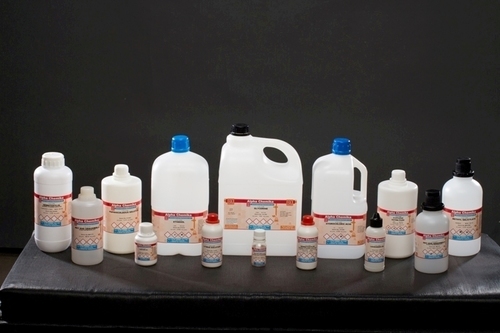
A: Sodium Dihydrogen Orthophosphate is available from dealers, exporters, manufacturers, retailers, suppliers, and traders across India. Packaging options range from HDPE bottles and polybags to drums, with sizes including 100g, 250g, 500g, 1kg, and bulk quantities depending on your laboratory or industrial needs.
Q: What is the recommended process for preparing buffer solutions with this compound?
A: For buffer solution preparation, dissolve the required amount of Sodium Dihydrogen Orthophosphate in distilled water, adjusting the pH as directed for your application. Given its high solubility and precise pH (4.5-5.0 in 1% solution), it ensures reliable results across diverse protocols.
Q: What benefits does Sodium Dihydrogen Orthophosphate offer compared to similar reagents?
A: This compound offers high purity (99.0%), low lead content (<0.0005%), and excellent solubility, making it a safe and consistent choice. Its non-flammable, odorless, and non-hazardous nature further adds to the convenience and safety during everyday laboratory use.


 English
 Spanish
 French
 German
 Italian
 Chinese (Simplified)
 Japanese
 Korean
 Arabic
 Portuguese








 Send Inquiry

 Send Inquiry


