About Mercuric Chloride
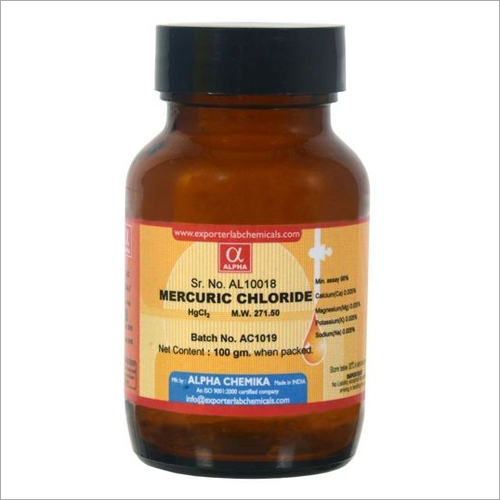
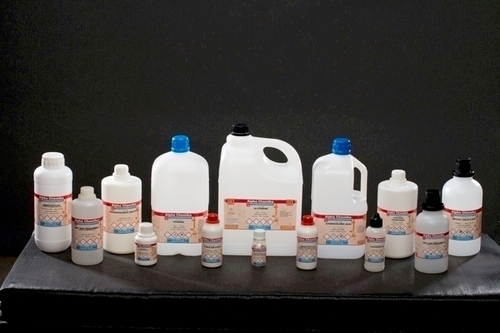
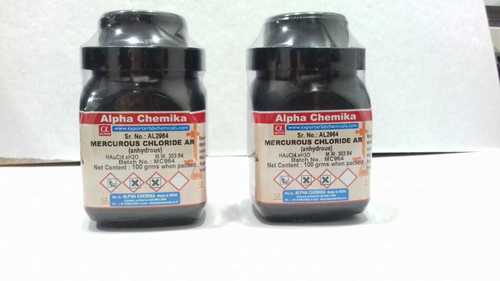
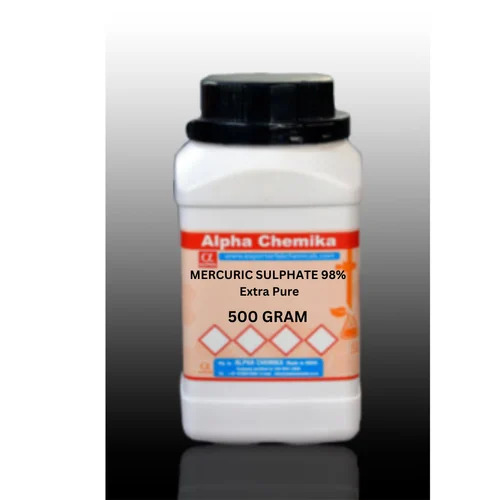
To establish a prominent presence in the market, we are engaged in offering our clients Mercuric Chloride. This chemical is used as a catalyst in oligosaccharide synthesis. We process this chemical in compliance with set safety norms using best quality compounds. Packed in quality grade bottles, this chemical is available in different quantity packaging options. We check this chemical on composition and safety parameters. We offer this Mercuric Chloride at reasonable prices.
Features :-
- No adulteration
- Highly effective
- Extended shelf life
Specifications of Mercuric Chloride :-
- Description : Mercuric Chloride is made by reacting mercuric chloride & potassium iodide
- Appearance : Red color powder
- Mol. Formula : HgI2
- Mol. Weight : 454.40
- CAS NO : 7774-29-0
Technical Details :-
| Sr No. | Tests | Specifications | Results |
| 1 | Description | Reddish orange powder | Reddish orange powder |
| 2 | Assay (Min.) | 99.0-100.5% | 99% |
| 3 | Melting point | About 259C | 259C |
4 | Substance insoluble in KI
solution |
<0.2% |
<0.2% |
| 5 | Chloride (Cl) | <0.015% | <0.015% |
6 | Foreign heavy metals, soluble mercury salts (as Hg) |
<0.05% |
<0.05% |
7 | Substance not reducible with formic acid (residue on ignition) |
<0.1% |
<0.1% |
| 8 | Loss on drying (on P2O5) | <0.5% | 0.45% |
Key Applications and UsageMercuric Chloride is primarily used as a laboratory reagent, chemical analysis agent, and disinfectant. Its antimicrobial properties make it valuable for antiseptic applications in controlled environments. Industries and academic institutions frequently choose it for precise analytical and research tasks due to its high purity and consistent, reliable results. Proper handling is essential, as it is highly toxic and poses environmental hazards.
Safe Handling and Storage GuidelinesGiven its toxic and light-sensitive nature, Mercuric Chloride should be stored in a tightly sealed HDPE container, kept in a cool, dry, and well-ventilated area. Avoid exposure to incompatible substances, especially strong reducing agents. Always wear personal protective equipment when handling and ensure proper disposal following regulatory guidelines to minimize safety and environmental risks.
FAQ's of Mercuric Chloride:
Q: How should Mercuric Chloride be safely stored and handled?
A: Store Mercuric Chloride in a well-ventilated, cool, and dry location, away from direct light and incompatible materials such as strong reducing agents. Keep it in tightly closed HDPE bottles and always use protective gloves, goggles, and lab coats when handling to avoid direct exposure.
Q: What are the primary uses of Mercuric Chloride in laboratory settings?
A: Mercuric Chloride is commonly used as a laboratory reagent for chemical analysis, an antiseptic, and a disinfectant. Its high purity and reliable properties make it suitable for precise analytical and research applications in scientific and industrial laboratories.
Q: When is Mercuric Chloride most beneficial in chemical analysis?
A: This compound is most beneficial when high accuracy and purity are required, such as trace analysis or specific chemical reactions where contamination must be minimized. Its consistent quality provides reliable results across varied analytical procedures.
Q: Where does Mercuric Chloride show significant environmental risk?
A: Mercuric Chloride is classified as both toxic and an environmental hazard. It poses substantial risk to aquatic and terrestrial environments if improperly released. Adhering to strict storage and disposal protocols is essential to prevent contamination.
Q: What is the manufacturing process for Mercuric Chloride?
A: Mercuric Chloride is produced through the direct synthesis of elemental mercury with chlorine gas. This method ensures a high purity product suitable for laboratory and research applications.
Q: Can Mercuric Chloride be used as an antiseptic, and what precautions are needed?
A: Mercuric Chloride does exhibit antiseptic properties; however, its use requires stringent safety protocols due to its toxicity. Adequate ventilation, protective equipment, and regulated disposal are necessary to avoid health risks.


 English
 Spanish
 French
 German
 Italian
 Chinese (Simplified)
 Japanese
 Korean
 Arabic
 Portuguese








 Send Inquiry

 Send Inquiry


