ethyl Iodide About
Product Details :
- METHYL IODIDE FOR SYNTHESIS 100 ml
- CH3I M.W. 141.94 250 ml
- Assay(GC) 99% 2.5 Ltr
- Wt. per ml at 20oC about 2.270-2.280gm
- Cas No: 74-88-4 Un No. 6.1/2644 TARIFF : 2827 60 90
- R : 21-23/25-37/38-40 S : 36/37-38-45 F : 9
Ethyl iodide is a crucial reagent for alkylation in the preparation of various pharmaceuticals and organic compounds. Its high reactivity and purity make it ideal for laboratory synthesis and industrial processes requiring selective ethylation. Common industries using this product include pharmaceutical manufacturing, research laboratories, and chemical synthesis plants.
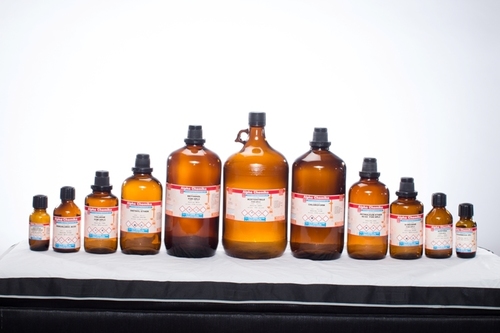
Safe Storage and Handling RecommendationsDue to its flammable nature (flash point 15C) and volatility, ethyl iodide must be stored in tightly sealed glass bottles or containers in a cool, dry, and well-ventilated area away from light. This ensures that the compound maintains its stability for the full two-year shelf life and safeguards users against potential hazards.
Physical and Chemical PropertiesEthyl iodide is recognized by its characteristic pleasant and ethereal odor. It features a high refractive index (n20/D 1.617), is insoluble in water, but dissolves easily in ethanol, ether, and chloroform. Its purity and laboratory grade designation make it suitable for precise scientific and industrial applications.
FAQ's of ethyl Iodide:
Q: How should ethyl iodide be safely stored to maintain its stability?
A: Ethyl iodide must be kept in a tightly closed glass bottle or sealed container, placed in a cool, dry, and well-ventilated area away from direct light to ensure its stability and effectiveness throughout its two-year shelf life.
Q: What are the primary uses and benefits of ethyl iodide in industry and research?
A: Ethyl iodide is widely utilized in organic synthesis as an alkylating agent, and as an intermediate in pharmaceutical manufacturing. Its high purity and reactivity make it valuable for precise laboratory and industrial applications, improving efficiency and product yields.
Q: When is ethyl iodide most commonly used during chemical processes?
A: It is most frequently used during the alkylation phase of organic synthesis, where it introduces ethyl groups into molecules, facilitating the formation of more complex pharmaceutical and industrial compounds.
Q: Where can ethyl iodide be sourced in India, and who are the typical suppliers?
A: Ethyl iodide can be procured from a variety of chemical dealers, exporters, manufacturers, retailers, suppliers, and traders throughout India. Ensure the supplier offers laboratory-grade quality for best results in research and industry.
Q: What precautions are required when handling ethyl iodide?
A: Due to its flammability (Hazard Class 3, flash point 15C) and volatility, handle ethyl iodide using proper safety equipment such as gloves, goggles, and working in a fume hood to prevent inhalation or skin exposure.
Q: Which solvents is ethyl iodide soluble in, and how does this affect its process use?
A: Ethyl iodide is insoluble in water but dissolves readily in ethanol, ether, and chloroform. This makes it easy to incorporate into a wide range of organic reactions where water-sensitive conditions are preferred.


 English
 Spanish
 French
 German
 Italian
 Chinese (Simplified)
 Japanese
 Korean
 Arabic
 Portuguese








 Send Inquiry

 Send Inquiry


