Amido Black About
Amido Black
Composition :
| Tests |
Specifications |
Results |
| Description | Blackish crystalline powder | Blackish crystalline powder |
| Dye content (Min.) | 80% | 80% |
| Absorption maxi. (in water) | 617-620nm | 618nm |
| Loss on drying at 105 C | <10% | 10% |
| Suitability as redox indicator | Passes test | Passes test |
| Suitability for electrophoresis | Passes test | Passes test |
Reliable Laboratory Staining SolutionAmido Black stands out as a dependable powdered dye for protein and nucleic acid staining, vital in biotechnology and forensic research. It provides a consistent dark blue color for clear visualization during electrophoresis and crime scene evidence analysis. Thanks to its laboratory grade and high purity, it delivers trustworthy results and minimal background interference.
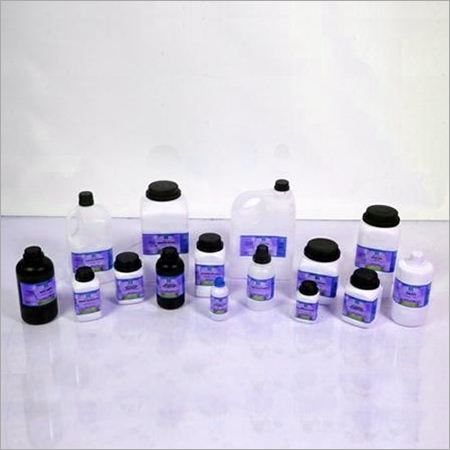
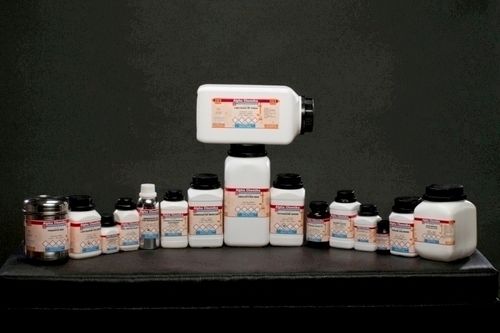
Optimized Stability and Easy StorageEngineered for stability, Amido Black maintains its efficacy when stored in a cool, dry, light-protected environment. Its powdered solid form ensures long-term usability, with a shelf life extending up to five years. Individual bottle packaging in multiple sizes supports varied research demands while preserving product integrity.
Versatile Application in Scientific ResearchThis synthetic dye is highly versatile - not only does it facilitate protein staining for biochemical assays, but it also serves forensic professionals in evidence detection. Amido Black is especially suitable for use in electrophoresis studies, making it a staple for scientific laboratories seeking reliable and reproducible staining results.
FAQ's of Amido Black:
Q: How should Amido Black be stored for optimal longevity?
A: Amido Black should be stored in a cool, dry place, away from direct light and moisture to preserve its stability and effectiveness. Make sure the storage container is tightly sealed when not in use.
Q: What is the main benefit of using Amido Black in research laboratories?
A: The principal benefit lies in its ability to deliver clear, high-contrast protein and nucleic acid staining, supporting accurate analysis in electrophoresis, forensic investigations, and other molecular biology procedures.
Q: When should Amido Black be used during electrophoresis procedures?
A: Amido Black is typically applied after electrophoresis runs, where it serves to stain separated proteins or nucleic acids, making the biomolecules visible for qualitative or quantitative analysis.
Q: What steps are involved in using Amido Black for protein staining?
A: Prepare a 1% Amido Black solution in water, apply it to the gel or membrane following electrophoresis, allow staining for a suitable period, and then thoroughly rinse to remove excess dye for optimal contrast.
Q: Where is Amido Black most commonly applied?
A: Amido Black finds extensive use in research laboratories, forensic science facilities, and academic institutions throughout India, particularly for protein staining, forensic analysis, and electrophoretic techniques.
Q: What precautions are necessary while handling Amido Black?
A: While handling, wear appropriate protective equipment to prevent dust inhalation and skin contact. Ensure the working area is well-ventilated and avoid prolonged exposure to light and moisture during use.
Q: How does the sensitivity of Amido Black to light and moisture affect its handling?
A: Due to its sensitivity, Amido Black should be prepared fresh for each application and kept protected from ambient light and humidity, both during storage and when in use, to maintain staining efficiency.


 English
 Spanish
 French
 German
 Italian
 Chinese (Simplified)
 Japanese
 Korean
 Arabic
 Portuguese











 Send Inquiry

 Send Inquiry


