About Silver Bromide
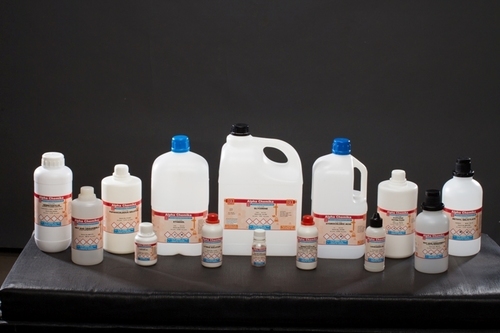
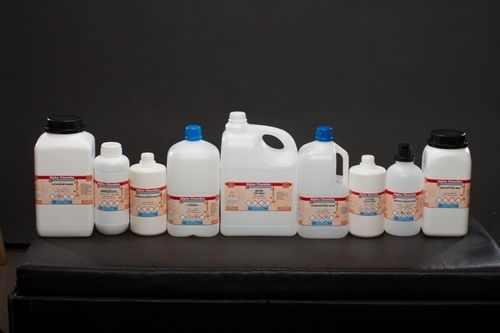
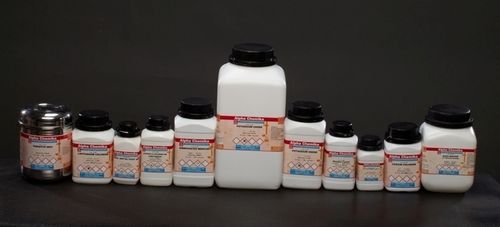
This chemical is widely used in photographic films and pigments. Our in-depth knowledge and industrial expertise has enabled us to emerge as a reputed organization engaged in offering Silver Bromide. It changes color when light shines on it. Offered chemical is widely used in chemical, cosmetic and ceramics industry. We use quality grade plastic containers to pack this chemical to ensure safe and easy transportation. Clients can avail Silver Bromide from us in different quantity packaging options.
Features:
- Light yellow solid
- Insoluble in water
- Extended shelf life
CERTIFICATE OF ANALYSIS
| Name Of Item : SILVER BROMIDE | Formula : AgBr |
| M.W. : 187.78 | Batch No. : |
| CAS NO. : 7785-23-1 | Cat. No. : AL4006 00100 |
| Type Of Test | Standard | Observed |
| Description | Yellow powder | Yellow powder |
| | | |
| Assay | (Min.) 99% | 99.26% |
Results : The above product complies with LR grade
Properties and Structure of Silver BromideSilver Bromide (AgBr), a yellow crystalline powder, is highly photosensitive and decomposes upon exposure to light or heat. With a cubic crystal structure, a melting point of 432 C, and a boiling point at 1,502 C (where it decomposes), it is insoluble in water but can dissolve in concentrated ammonia or potassium cyanide. Its neutral pH, odorless nature, and tasteless profile ensure versatility in laboratory and industrial applications.
Safe Handling and Storage RecommendationsDue to its photosensitive and hazardous nature, Silver Bromide should be handled with care. Always use personal protective equipment, including gloves and eye protection, and avoid inhaling dust. The compound must be stored in tightly closed, light-resistant containers such as amber glass bottles, in a cool and dry space. Keeping it away from direct light and heat extends its shelf life.
Applications in Industry and LaboratoriesSilver Bromide finds primary use in the photographic industry as a key component of films and papers due to its ability to react to light. It is also valued in chemical analysis, the manufacture of light-sensitive materials, and as a laboratory reagent. Its unique properties make it indispensable for professionals working in fields demanding light-sensitive compounds.
FAQ's of Silver Bromide:
Q: How is Silver Bromide typically produced in the laboratory?
A: Silver Bromide is synthesized by reacting a silver nitrate solution with either potassium bromide or sodium bromide in aqueous medium. This process precipitates Silver Bromide as a yellow crystalline solid, which is subsequently filtered, washed, and dried under subdued light to prevent photodecomposition.
Q: What are the main uses of Silver Bromide in industry and research?
A: Silver Bromide is widely utilized in the photographic industry for films and papers due to its light-sensitive nature. Additionally, it is applied in chemical analyses and in manufacturing various light-sensitive materials. Its reliable photosensitivity also makes it a valuable laboratory reagent.
Q: When is the right time to use Silver Bromide in laboratory experiments?
A: Silver Bromide should be used when a photosensitive reagent is required, particularly in analytical chemistry or experiments involving light reactions. Ensure that usage and handling are carried out under subdued or red-light conditions to maintain compound integrity.
Q: Where should Silver Bromide be stored for maximum stability?
A: For optimal longevity, Silver Bromide must be kept in tightly sealed bottles-ideally amber glass containers-in a cool, dry, and dark environment. These precautions minimize exposure to light and heat, both of which can rapidly decompose the substance.
Q: What precautions should be taken while handling Silver Bromide?
A: Always wear appropriate personal protective equipment, including gloves, goggles, and a lab coat, when working with Silver Bromide. Work in a well-ventilated area, avoid generating dust, and never ingest or inhale the powder, as it is toxic and can cause irritation.
Q: How does Silver Bromide benefit photographic applications?
A: Silver Bromide's photosensitivity enables chemical changes upon exposure to light, allowing it to form the basis of photographic films and papers. This property makes it indispensable for capturing and developing images in both traditional and scientific applications.


 English
 Spanish
 French
 German
 Italian
 Chinese (Simplified)
 Japanese
 Korean
 Arabic
 Portuguese








 Send Inquiry

 Send Inquiry


