


 English
 Spanish
 French
 German
 Italian
 Chinese (Simplified)
 Japanese
 Korean
 Arabic
 Portuguese


CERTIFICATE OF ANALYSIS
| Name Of Item : MERCURIC NITRATE AR | Formula : Hg(NO3)2.H2O |
|
| (C.I. No. 13025) | Batch No. : MERC006 |
|
| M.W. : 242.62 |
| |
| CAS NO. : 7783-34-8 | Cat. No. : AL12947 |
|
| |
| |
|
|
|
|
| Type Of Test | Standard | Observed |
|
|
|
|
| Description | White hygroscopic crystalline | White hygroscopic crystalline |
|
| powder | powder |
| Assay | (Min.) 98.5% | 99.02% |
| Solution in dilute nitric acid | Passes test | Passes Test |
| Residue after ignition | <0.01% | 0.009% |
| Chloride (Cl) | <0.002% | 0.001% |
| Sulphate (SO4) | <0.002% | 0.0012% |
| Copper (Cu) | <0.0005% | 0.00039% |
| Iron (Fe) | <0.001% | <0.001% |
| Lead (Pb) | <0.0005% | 0.00041% |
| Potassium (K) | <0.005% | 0.004% |
| Sodium (Na) | <0.005% | <0.005% |
|
|
|
|
Results : The above product complies with AR grade
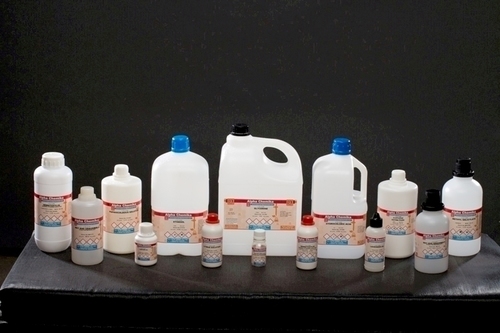

Price:
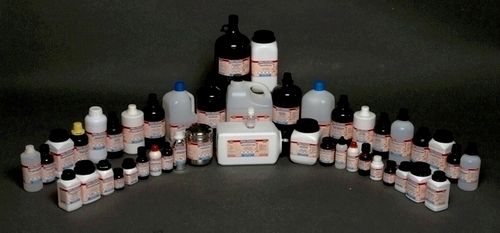
Price 3057 INR / Gram
Minimum Order Quantity : 500 Grams
Type : Other, Inorganic compound
Appearance : A white crystalline powder
Size : 25 g, 100 g, 500 g, 1 kg
Physical State : Solid
Price 2905 INR / Gram
Minimum Order Quantity : 25 Grams
Type : University Lab Chemicals
Appearance : Fine powder
Size : Custom packaging upon request
Physical State : Solid
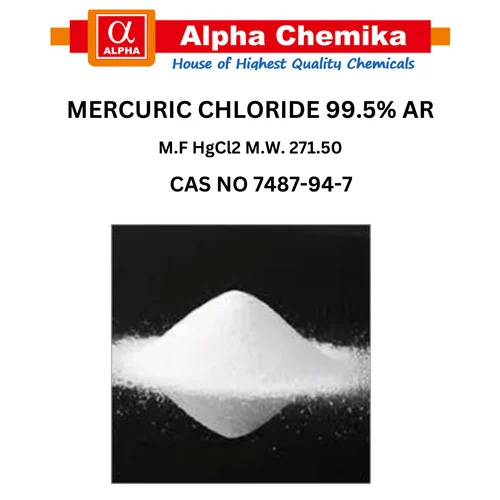
Price 11579 INR / Kilograms
Minimum Order Quantity : 1 Kilograms
Type : Other, Inorganic chemical
Appearance : White crystalline powder
Size : Fine powder
Physical State : Solid
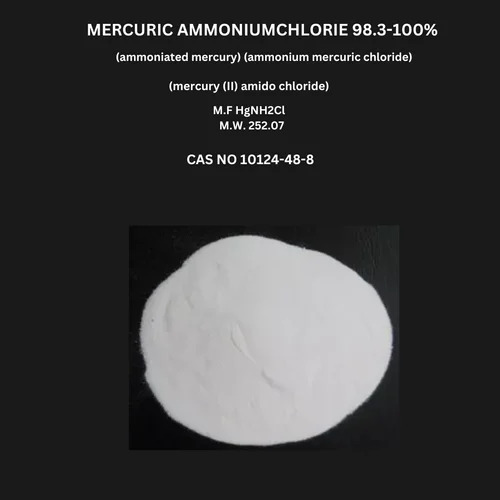
Minimum Order Quantity : 10 Kilograms
Type : Other, High Purity Material
Appearance : White powder
Size : Fine particle
Physical State : Powder

|
 |
ALPHA CHEMIKA
All Rights Reserved.(Terms of Use) Developed and Managed by Infocom Network Private Limited. |

 Send Inquiry

 Send Inquiry


