


 English
 Spanish
 French
 German
 Italian
 Chinese (Simplified)
 Japanese
 Korean
 Arabic
 Portuguese



Also known by the name oxidation reduction indicator, a Redox Indicator experiences a fixed change over a particular electrode potential. Our offered Erioglaucine is highly demanded in numerous chemical industry as a dye to render intensified blue color to the material. It is derived from the class of acid amino-tri-phenyl-methane and is known as Alphazurine, Blue No. 1 and Acid Blue 9. The physical state of the mentioned compound is solid at twenty degree Celsius of temperature. Erioglaucine (REDOX Indicator) is highly soluble in water that appears to be violet in nature with melting point 283 degree Celsius.
Certificate of Analysis :-
Results : The above product complies with AR grade

Price:
Price 3223 INR / Gram
Minimum Order Quantity : 25 Grams
Shelf Life : 3 years
Usage : Laboratory analysis and microscopy
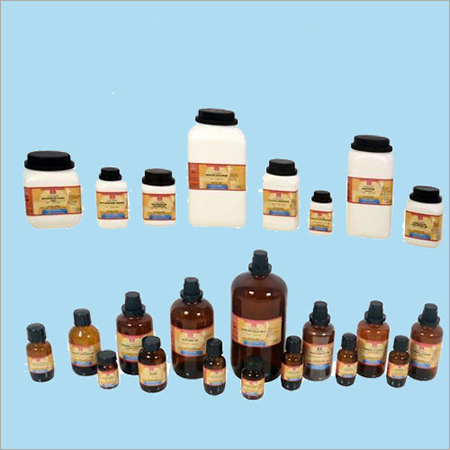
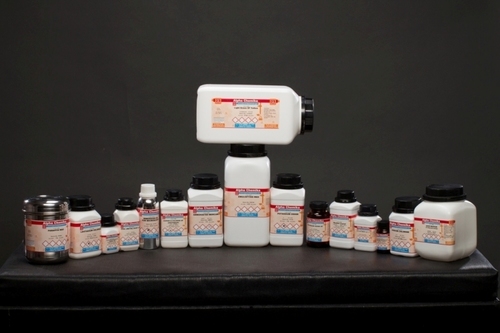
Packaging Type : Plastic/Glass Bottles
Storage Instructions : Store below 30C, protect from light, tightly closed
Price 1783 INR / Gram
Minimum Order Quantity : 100 Grams
Shelf Life : 5 years
Usage : Microscopy stain, Laboratory chemical
Packaging Type : Bottle
Storage Instructions : Store in a tightly closed container, in a cool, dry place
Price 7012 INR / Gram
Minimum Order Quantity : 100 Grams
Shelf Life : 2 years
Usage : For laboratory use, research, and diagnostics
Packaging Type : Bottle
Storage Instructions : Store at room temperature, protected from light
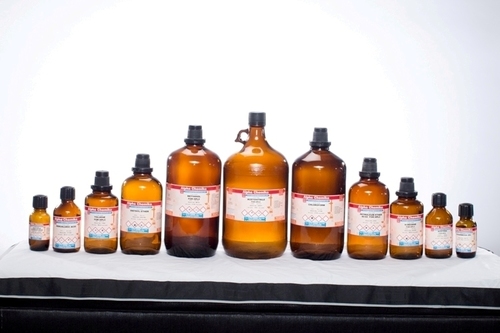
Minimum Order Quantity : 100ML Liters
Shelf Life : 24 months
Usage : Prepared indicator solution for titrations
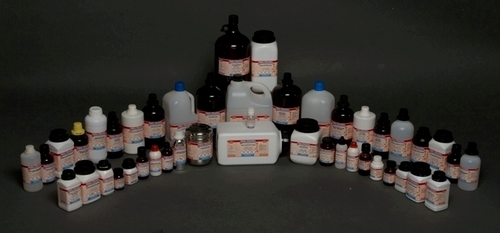
Packaging Type : Sealed glass or plastic bottle
Storage Instructions : Store in a cool, dry place away from direct sunlight




|
 |
ALPHA CHEMIKA
All Rights Reserved.(Terms of Use) Developed and Managed by Infocom Network Private Limited. |

 Send Inquiry

 Send Inquiry


