Isopropenyl Acetate About
Isopropenyl Acetate
LC3084 Isopropenyl acetate
for synthesis
| Order number | Packaging | Quantity | Price |
| AC30084 | Glass bottle | 100 ml
| 11.88
|
| AC30084 | Glass bottle | 1 L
| 29.25
|
| Product information |
| Synonyms | Acetone enol acetate |
| Hill Formula | C5H8O2 |
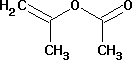
| Chemical formula | CH3COOC(CH3)=CH2 |
| HS Code | 2915 39 00 |
| EC number | 203-562-7 |
| Molar mass | 100.12 g/mol |
| CAS number | 108-22-5 |
| Chemical and physical data |
| Ignition temperature | 439 C DIN 51794 |
| Solubility | 34 g/l (20 C) |
| Melting point | -93 C |
| Molar mass | 100.12 g/mol |
| Density | 0.92 g/cm3 (20 C) |
| pH value | 3 (34 g/l, H2O, 20 C) |
| Boiling point | 97 C (1013 hPa) |
| Vapor pressure | 23 hPa (20 C) |
| Explosion limit | 1.8 %(V) |
| Flash point | 9 C |
| Refractive index | 1.4 (20 C, 589 nm) |
| Safety information |
| R Phrase | R 11
Highly flammable. |
| S Phrase | S 7/9-16
Keep container tightly closed and in a well-ventilated place.Keep away from sources of ignition - No smoking. |
| Categories of danger | highly flammable |
| Hazard Symbol | Flammable |
| Storage class | 3 Flammable Liquids |
| WGK | WGK 1 slightly water endangering |
| Disposal | 3
Relatively unreactive organic reagents should be collected in container A. If halogenated, they should be collected in container B. For solid residues use container C. |
| Transport information |
| Declaration (transport by sea) IMDG-Code | UN 2403 ISOPROPENYL ACETATE, 3, II |
| Declaration (transport by air) IATA-DGR | UN 2403 ISOPROPENYL ACETATE, 3, II |
| Toxicological data |
| LD 50 oral | LD50 rat 3000 mg/kg |
| LD 50 dermal | LD50 rat > 2000 mg/kg |
| Specifications |
| Assay (GC, area%) | 99 % |
| Density (d 20 C/ 4 C) | 0.920 - 0.923 |
| Identity (IR) | passes test |
Versatile Solvent and Synthesis IntermediateIsopropenyl Acetate is widely valued within chemical and industrial sectors for its ability to function both as a solvent and as an intermediate in organic synthesis. Its high purity and miscibility with a range of organic solvents make it adaptable for various formulation and manufacturing processes. Suitable for laboratory and scale-up applications, it seamlessly integrates into chemical processes requiring an efficient, reliable solvent.
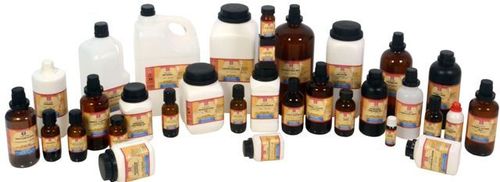
Safe Storage and Handling GuidelinesGiven its flammable nature, Isopropenyl Acetate should always be stored in a cool, dry, well-ventilated space, away from any incompatible materials. Proper packaging in HDPE drums or glass bottles ensures safety and product integrity. Compliance with the UN 1220 shipping classification and strict adherence to recommended storage conditions help maintain stability and extend its 24-month shelf life.
FAQ's of Isopropenyl Acetate:
Q: How should Isopropenyl Acetate be properly stored?
A: Isopropenyl Acetate should be stored in tightly sealed containers, such as HDPE drums or glass bottles, in a cool, dry, and well-ventilated area. It must be kept away from heat sources, sparks, open flames, and incompatible substances to ensure stability and safety.
Q: What are the primary uses of Isopropenyl Acetate?
A: This chemical is primarily used as an intermediate in organic synthesis and as an industrial solvent. Its high miscibility with organic solvents and characteristic ester-like odor also make it suitable for specialized chemical manufacturing processes.
Q: When does Isopropenyl Acetate become hazardous during handling?
A: Isopropenyl Acetate is classified as a flammable liquid with a flash point of 15C. It poses fire and health hazards if exposed to ignition sources, if there is inadequate ventilation, or when handled without proper protective equipment. Always manage according to safety data guidelines.
Q: Where can Isopropenyl Acetate be purchased in India?
A: This chemical is available through authorized dealers, exporters, manufacturers, retailers, suppliers, and traders across India, often packaged in HDPE drums or glass bottles and available in customized container sizes.
Q: What is the process for disposing of Isopropenyl Acetate safely?
A: Unused product and empty containers should be disposed of in accordance with local environmental regulations. Given its ecological impact, it's important to avoid releasing Isopropenyl Acetate to the environment and to engage certified hazardous waste disposal services.
Q: How does using Isopropenyl Acetate benefit industrial operations?
A: Its high purity and excellent solvency enhance various manufacturing and synthetic processes, improving efficiency and product outcomes. Its stability also reduces downtime associated with product degradation.
Q: What precautions should be taken during the usage of Isopropenyl Acetate?
A: Appropriate personal protective equipment-such as gloves and eyewear-should be used. Work in a well-ventilated area, keep the chemical away from ignition sources, and ensure that proper fire safety measures are in place.


 English
 Spanish
 French
 German
 Italian
 Chinese (Simplified)
 Japanese
 Korean
 Arabic
 Portuguese








 Send Inquiry

 Send Inquiry


