Octyl Sulphate Sodium Salt for HPLC About
We offer Octyl Sulphate Sodium Salt for HPLC, which comes in the group of generic salts known as sodium alkyl sulfates. It is the concoction of various alkyls as the term evinces, e.g. sodium lauryl sulfate. It smells of detergent and is water-soluble. Used in shower gels, shampoos, detergents, dish washing liquids, fabric softeners and hair conditioners, this can be utilized as fire extinguishing agent, as it is not combustible. In the cosmetic industry, Octyl Sulphate Sodium Salt for HPLC compound is utilized as an emulsifier so as to blend oily and water-soluble compounds for dentifrice as well as moisturizing products.
Technical Specification :-
| TEST | SPECIFICATIONS | RESULTS |
| Description | white crystalline powder | white crystalline powder |
| Identity(IR) | Passes Test | Passes Test |
| Minimum Assay (on dried Sub ) | NLT 99.0 % | 100.50% |
| pH-value (10 % w/v , water ) | 6.0 TO 8.0 | 6.9 |
| Max. Absorbance of 0.005 mol/l Aq. Soln | | |
| in a 10 mm cuvette | | |
| At 200 nm | NMT 0.15 | 0.004 |
| At 220 nm | NMT 0.05 | 0.004 |
| Loss on Drying (1200 C ) | NMT 2.0 % | 0.66% |
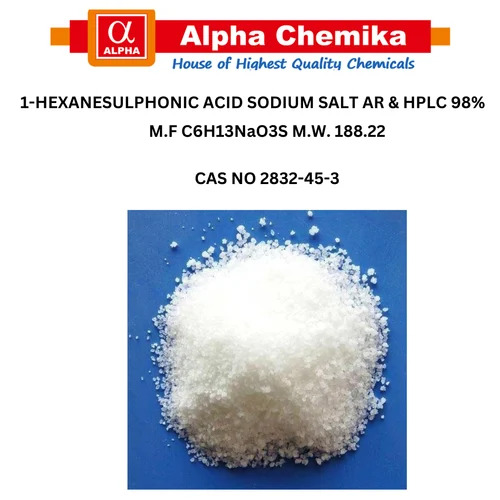
High Purity and Analytical PerformanceThis sodium octyl sulfate features a purity of 98% (assay), ensuring consistency and accuracy for HPLC and chromatographic analysis. Its highly soluble, odorless formulation allows for straightforward sample preparation, and its stable chemical nature means no degradation under standard laboratory storage conditions.
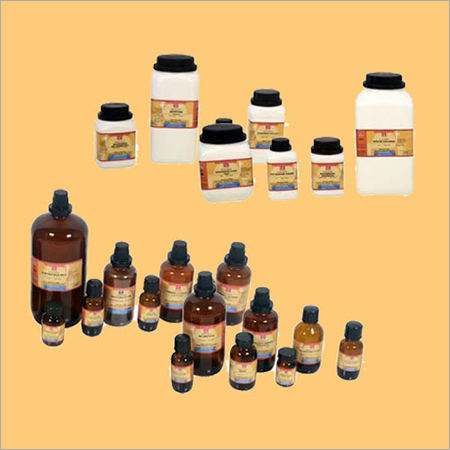
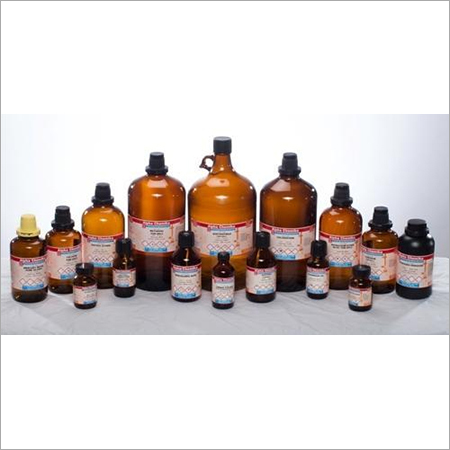
Flexible Packaging and StorageAvailable in custom packaging options-ranging from 25g to 1kg-this product caters to the diverse needs of research, manufacturing, and educational laboratories. It is best stored in a cool, dry place within a tightly-sealed container to maintain product integrity throughout its five-year shelf life.
Versatile Applications in Analytical ChemistryOctyl Sulphate Sodium Salt is primarily used as an ion-pairing agent in HPLC, as well as a reagent in various chromatographic and laboratory applications. Its excellent aqueous conductivity and non-flammable nature make it safe and easy to handle, enhancing procedural efficiency and reproducibility.
FAQ's of Octyl Sulphate Sodium Salt for HPLC:
Q: How is Octyl Sulphate Sodium Salt for HPLC typically used in laboratory applications?
A: This product is most commonly employed as an ion-pairing agent in HPLC, where it improves the separation of ionic and nonionic compounds. Its high purity and solubility make it ideal for precise analytical and chromatography processes.
Q: What are the recommended storage conditions for this compound?
A: To preserve stability and efficacy, store Octyl Sulphate Sodium Salt in a tightly closed container in a cool, dry environment. Avoid exposure to moisture and direct sunlight. Under proper storage, the shelf life is up to five years.
Q: When should I choose this product for my analytical work?
A: Use this compound when your protocols require high-purity, non-hazardous, and reliable anionic surfactants-particularly in HPLC or chromatographic separations where sensitive detection and minimal interference are crucial.
Q: Where can I purchase Octyl Sulphate Sodium Salt for HPLC?
A: It is available through various suppliers, dealers, manufacturers, and exporters across India. Custom packaging can be arranged to suit your requirements, whether you need small research quantities or larger industrial volumes.
Q: What are the main benefits of using Octyl Sulphate Sodium Salt in HPLC?
A: Its excellent solubility, superior conductivity, stable chemical nature, and high purity ensure accurate, reproducible, and interference-free chromatographic results, making it highly beneficial for precise analytical protocols.
Q: What is the process for preparing a standard solution using this product?
A: Simply dissolve the powder in water at ambient temperature, as it is highly soluble. Adjust the pH as needed (5% solution pH is typically 6.0-8.0 at 25C), and filter for particulate removal before analytical use.
Q: Is Octyl Sulphate Sodium Salt safe to handle and transport?
A: Yes, the product is classified as non-hazardous, non-flammable, and stable under normal laboratory conditions, making it safe for standard handling, storage, and transportation practices.


 English
 Spanish
 French
 German
 Italian
 Chinese (Simplified)
 Japanese
 Korean
 Arabic
 Portuguese










 Send Inquiry

 Send Inquiry


