About Naphthylacetic acid
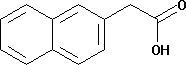
LC4223 2-Naphthylacetic acid
for synthesis
Order number Packaging Quantity Price
AC31223
Plastic bottle 10 g 29.97
Product information
Synonyms -Naphthylacetic acid, 2-Naphthaleneacetic acid
Hill Formula C12H10O2
HS Code 2916 39 00
EC number 209-475-0
Molar mass 186.21 g/mol
CAS number 581-96-4
Chemical and physical data
Solubility (20 C) insoluble
Melting point 139 - 142 C
Molar mass 186.21 g/mol
Safety information
Storage class 10 - 13 Other liquids and solids
WGK
WGK 3 highly water endangering
Disposal 4
Liquid organic acids or solutions should be diluted, if necessary, and carefully neutralized with sodium hydrogen carbonate (Cat. No. 106323) or with sodium hydroxide (Cat. No 106462). Before filling into container D, check the pH with pH universal indicator strips (Cat. No. 109535).
Specifications
Assay (HPLC, area%) 98 %
Melting range
- lower value 139 C
- upper value 142 C
Identity (IR) passes test
Reliable Plant Growth EnhancementNaphthylacetic acid is widely employed to stimulate root development and accelerate plant growth. Its effectiveness as a rooting agent makes it indispensable in propagation processes, providing robust root systems for a wide range of crops and ornamentals. Its technical-grade formulation ensures purity and consistency in professional applications.
Safe and User-Friendly SolutionClassified as non-hazardous and odorless, NAA is easy and safe to handle, transport, and store. Its low ecotoxicity and non-flammable nature make it suitable for environmentally conscious operations. The stable crystalline form ensures long-term shelf life with minimal degradation under recommended conditions.
FAQ's of Naphthylacetic acid:
Q: How should Naphthylacetic acid be applied for optimal plant growth?
A: Naphthylacetic acid is typically used by preparing a dilute solution in organic solvents or water (despite its slight solubility), then applied to plant cuttings or seeds to encourage rooting and growth. Precise concentrations and procedures depend on the species and intended results.
Q: What benefits does using Naphthylacetic acid offer to growers?
A: NAA enhances root formation, accelerates plant establishment, and improves crop uniformity. These effects contribute to healthier, more resilient plants and can increase overall productivity in agricultural and horticultural operations.
Q: When is the best time to use Naphthylacetic acid during plant cultivation?
A: NAA is most effective when used during propagation, such as when planting seeds, transplanting, or rooting cuttings. It can also be used at specific growth stages to boost development based on crop requirements.
Q: Where can Naphthylacetic acid be stored to maintain its quality?
A: To preserve its stability and efficacy, NAA should be stored in a cool, dry place with the container tightly closed. Avoid exposure to moisture, direct sunlight, and heat sources.
Q: What is the process for ordering Naphthylacetic acid in bulk?
A: Orders can be placed for a minimum of 25 kg, with packaging options including bags or drums. Custom sizing is available per requirement, with supply direct from dealers, exporters, manufacturers, retailers, suppliers, and traders in India.
Q: Is Naphthylacetic acid safe and environmentally friendly to use?
A: NAA is not classified as hazardous, is odorless, and has low ecotoxicity, making it a safe choice for most users and environments when handled according to standard safety practices.
Q: What applications is Naphthylacetic acid best suited for?
A: This product is ideal for use as a plant growth hormone and rooting agent in propagation, transplanting, and tissue culture, supporting a variety of crops and ornamental plants.


 English
 Spanish
 French
 German
 Italian
 Chinese (Simplified)
 Japanese
 Korean
 Arabic
 Portuguese








 Send Inquiry

 Send Inquiry


