SODIUM BICARBONATE (sodium hydrogen carbonate) About
SODIUM BICARBONATE
- SODIUM HYDROGEN CARBONATE PURIFIED
- NaHCO3 M.W. 84.01
- Minimum assay(by acidimetry) 99.5-101%
- pH(5% water) 8-8.5
- Maximum Limits of Impurities:
- Chloride(Cl) 0.015%
- Sulphate(SO4) 0.01%
- Total nitrogen 0.002%
- Heavy metals(as Pb) 0.0005%
- Arsenic(As) 0.0002%
- Lead(Pb) 0.0005%
- Calcium(Cl) 0.01%
- Iron(Fe) 0.002%
- Cas No: 144-55-8 Un No. NR TARIFF : 2836 30 00
- S : 22-24/25 F : 14
Exceptional Versatility for Laboratory and IndustrySodium bicarbonate's broad utility spans from laboratory analysis to industrial applications. Its ability to neutralize acids, regulate pH, and perform as a leavening agent makes it indispensable in scientific research, food processing, pharmaceuticals, and water treatment. Its chemical stability and high purity ensure consistent, reliable results in every use.
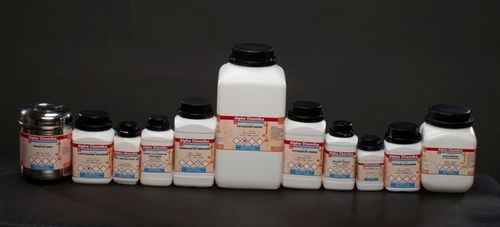
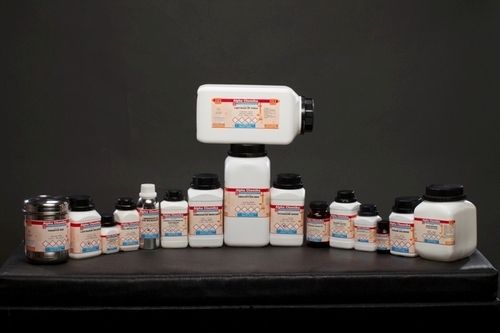
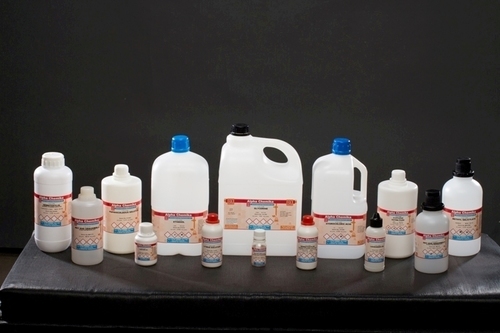
Safe Handling and Storage GuidelinesClassification as a non-hazardous material allows sodium bicarbonate to be managed safely in laboratory and industrial settings. For best results and to maintain quality, it should be stored in tightly closed containers, in cool, dry environments. Packaging options include HDPE bags and drums, available in standard or customized sizes, supporting a variety of requirement scales.
FAQ's of SODIUM BICARBONATE (sodium hydrogen carbonate):
Q: How should sodium bicarbonate be stored to maintain its quality?
A: Sodium bicarbonate should be stored in a cool, dry place and kept in a tightly closed container, such as HDPE bags or drums, to prevent moisture absorption and maintain its purity for up to two years.
Q: What are the primary uses of laboratory grade sodium bicarbonate?
A: This compound is widely used as a reagent in laboratory research, for neutralizing acids, as a leavening agent in baking, in water treatment processes, and in the pharmaceutical and food industries, thanks to its mild alkalinity and high purity.
Q: When does sodium bicarbonate decompose and what is its melting point?
A: Sodium bicarbonate decomposes upon heating and does not have a conventional boiling point. Its decomposition (melting) begins at around 50C, resulting in the release of carbon dioxide and water.
Q: Where can sodium bicarbonate be sourced or supplied from in India?
A: Sodium bicarbonate, laboratory grade, is available from manufacturers, exporters, dealers, retailers, suppliers, and traders across India in standard or customized packaging.
Q: What benefits does using sodium bicarbonate offer in laboratory applications?
A: Its high purity (99.5%) ensures precise, reliable results. Additionally, it is non-hazardous, easy to handle, and effectively neutralizes acids, regulates pH, and participates in various analytical procedures, making it an essential laboratory chemical.
Q: How is sodium bicarbonate manufactured?
A: Sodium bicarbonate is produced synthetically, typically by reacting sodium carbonate with carbon dioxide and water under controlled conditions, ensuring uniformity and high quality for laboratory and industrial use.


 English
 Spanish
 French
 German
 Italian
 Chinese (Simplified)
 Japanese
 Korean
 Arabic
 Portuguese










 Send Inquiry

 Send Inquiry


