Auramine for Microscopy About
Auramine is known to be diarylmethane dye which acts as a version of Schiff reagent and its crystals appear to be yellow in color in their pure form. It is soluble in water and ethanol. Being a fluorescent stain in nature, our offered Auramine plays a crucial role in the process of microscopy with its staining capabilities of detecting acid-fast bacteria called Mycobaterium. During microscopy, possibility of artifacts can be minimized by the counter stain potassium permanganate. Thus, the cells viewed appear to be reddish orange or bright yellow in color under ultraviolet light. When it combines with Rhodamine, mycolic acids present in cell wall of various organisms helps in providing resistance against de-colorization with the help of acid-alcohol.
Certificate of Analysis :-
- Name Of Item : AURAMINE (M.S.) (C.I. No. 41000)
- Formula : C17H22N3Cl
- M.W. : 303.84
- Batch No. : A0580
- Cat. No. : AL0511 00100
Technical Specifications :-
| Type Of Test | Standard | Observed |
| Description | Yellow colored powder | Yellow colored powder |
| Absorption | Max. 431-433nm | 432 nm |
| Absorptivity ( A1%; | | |
| 1cm=432 nm , pH 6.0 on | | |
| dried substance) | 880 - 940 | 931.6 |
| Loss on drying ( 105C ) | < 2% | 1.2% |
| Suitability for microscopy | Passes test | Passes test |
Results : The above product complies with LR grade
Versatile Staining Reagent for Reliable MicroscopyAuramine O delivers high-contrast fluorescent staining for precise microscopic examinations, especially acid-fast bacteria detection. Its excellent solubility in water and ethanol ensures ease of preparation, while its neutral pH maintains sample integrity. Suited for use by research laboratories and exporters, its stability and purity make it a valuable tool for advanced and routine laboratory work.
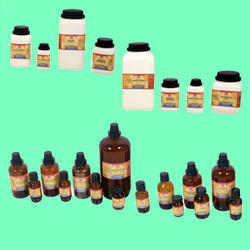
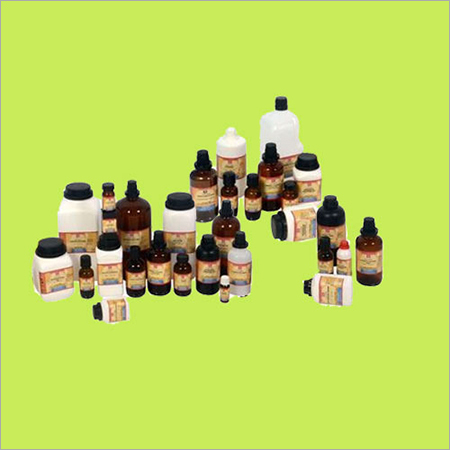
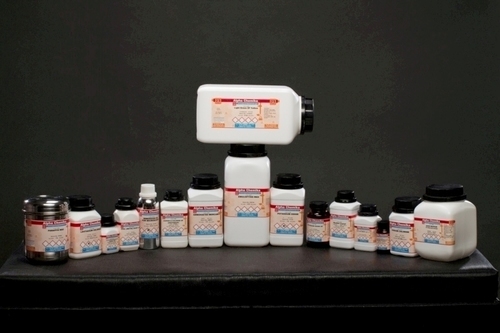
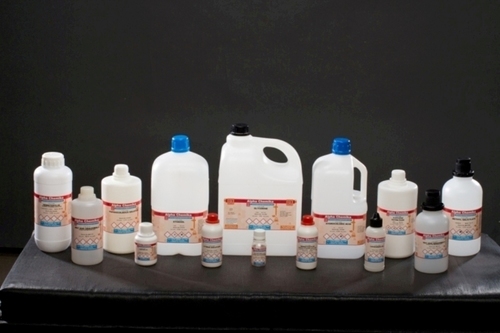
Simple Storage and Safe HandlingThis reagent is supplied as a stable yellow powder in sealed bottles of various sizes. For best results, store Auramine O in a cool, dry environment and protect it from light. Although it is classified as an irritant, safe handling with appropriate protective gear ensures straightforward usage. Clearly-labeled packaging assists in proper identification and storage.
FAQ's of Auramine for Microscopy:
Q: How should Auramine O be stored for optimal shelf life?
A: Store Auramine O in a cool, dry place away from direct light. This ensures it remains stable and maintains its effectiveness throughout its 36-month shelf life.
Q: What is the recommended concentration of Auramine O for staining?
A: For microscopy and fluorescent staining, dilute Auramine O to a working solution in the range of 0.1-1% (w/v). Prepare fresh solutions as needed to guarantee optimal staining results.
Q: When is Auramine O used in laboratory microscopy?
A: Auramine O is typically used during microscopic examination and acid-fast staining procedures, particularly for detecting mycobacteria and certain fungi in clinical and research laboratories.
Q: Where can Auramine O be sourced and in what packaging sizes?
A: Auramine O is available from dealers, exporters, manufacturers, retailers, suppliers, and traders across India. It is supplied in 25 g, 100 g, and 500 g bottles for laboratory use.
Q: What precautions should be taken while using Auramine O?
A: As Auramine O is classified as an irritant, you should handle it with gloves, protective clothing, and in a well-ventilated area. Avoid inhalation and skin contact to maintain safety during use.
Q: How is Auramine O prepared for microscopic staining?
A: To prepare a staining solution, dissolve the powder in distilled water or ethanol until the desired concentration (0.1-1% w/v) is achieved. Make sure the working solution is neutral (pH 7.0) for optimal staining performance.
Q: What are the main benefits of using Auramine O for microscopy?
A: Auramine O offers high-purity, effective fluorescent staining and excellent solubility, ensuring vibrant visualization under the microscope. Its stability and compatibility with standard laboratory protocols make it a reliable choice for detailed microscopic analysis.


 English
 Spanish
 French
 German
 Italian
 Chinese (Simplified)
 Japanese
 Korean
 Arabic
 Portuguese








 Send Inquiry

 Send Inquiry


