Lead(II) nitrate About
LC3561 Lead(II) nitrate
for analysis EMSURE ACS,Reag. Ph Eur
Order number Packaging Quantity Price
AC30561
Plastic bottle 100 g 14.94
AC30561
Plastic bottle 1 kg 56.25
Product information
Grade ACS,Reag. Ph Eur
Hill Formula N2O6Pb
Chemical formula Pb(NO3)2
HS Code 2834 29 20
EC number 233-245-9
Molar mass 331.2 g/mol
EC index number 082-001-00-6
CAS number 10099-74-8
Chemical and physical data
Solubility 522 g/l (20 C)
Melting point 470 C (decomposition)
Molar mass 331.2 g/mol
Density 4.53 g/cm3 (20 C)
Bulk density 1850 kg/m3
pH value 3 - 4 (50 g/l, H2O, 20 C)
Vapor pressure (20 C)
Safety information according to GHS
Hazard Statement(s) H360Df: May damage the unborn child. Suspected of damaging fertility.
H332: Harmful if inhaled.
H302: Harmful if swallowed.
H373: May cause damage to organs through prolonged or repeated exposure.
H410: Very toxic to aquatic life with long lasting effects.
Precautionary Statement(s) P201: Obtain special instructions before use.
P273: Avoid release to the environment.
P308 + P313: IF exposed or concerned: Get medical advice/attention.
Signal Word Danger
Hazard Pictogram(s)
Storage class 5.1 B Oxidizing agents (TRG 515 Group 2+3)
WGK WGK 3 highly water endangering
Disposal 15
Heavy metal-containing solutions and solids: container E. Stir Raney nickel (also: Urushibara nickel) in the form of an aqueous suspension into hydrochloric acid (Cat. No. 100312) until dissolved (container E). Neither Raney nickel itself nor any filter residues should be allowed to dry out, otherwise they will spontaneously ignite in air. In this context, heavy metal means any compound of antimony, arsenic, cadmium, chromium(VI), copper, lead, nickel and tin, as well as these subtances in metallic form, if they are classified as hazardous (acc. to AbfallverzeichnisV - Waste Catalogue Ordinance, Appendix 3). Other heavy metals should be collected separately.
Safety information
R Phrase R 61-20/22-33-50/53-62
May cause harm to the unborn child.Also harmful by inhalation and if swallowed.Danger of cumulative effects.Very toxic to aquatic organisms, may cause long-term adverse effects in the aquatic environment.Possible risk of impaired fertility.
S Phrase S 53-45-60-61
Avoid exposure - obtain special instructions before use.In case of accident or if you feel unwell, seek medical advice immediately (show the label where possible).This material and its container must be disposed of as hazardous waste.Avoid release to the environment. Refer to special instructions/ Safety data sheets.
Categories of danger toxic for reproduction, harmful, dangerous for the environment
Hazard Symbol Toxic
Dangerous for the environment
Transport information
Declaration (transport by sea) IMDG-Code UN 1469 LEAD NITRATE, 5.1 (6.1), II, Marine Pollutant: P, Segregation Group: 7 (Heavy metals and their salts (including their organometallic compounds)), 9 (Lead and its compounds)
Declaration (transport by air) IATA-DGR UN 1469 LEAD NITRATE, 5.1 (6.1), II
Specifications
Assay (complexometric) 99.5 %
Insoluble substances 0.005 %
Chloride (Cl) 0.0005 %
Ca (Calcium) 0.005 %
Cu (Copper) 0.0005 %
Fe (Iron) 0.0005 %
K (Potassium) 0.005 %
Na (Sodium) 0.02 %
Versatile Laboratory and Industrial ApplicationsLead(II) nitrate's high purity and water solubility make it valuable for analytical reagents in research settings. Its strong oxidizing properties suit industrial applications, such as in the manufacturing of matches and explosives. Its stable crystalline nature also ensures reproducibility and reliability in laboratory processes.
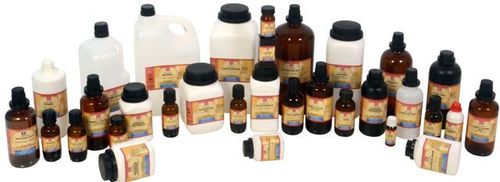
Safe Handling and Storage RecommendationsBecause Lead(II) nitrate is toxic and may cause lead poisoning if ingested or inhaled, users must wear protective equipment including gloves, eye protection, and appropriate clothing. Store it in a cool, dry, and ventilated area, away from incompatible substances. Custom packaging ensures safe containment during handling and transport.
FAQ's of Lead(II) nitrate:
Q: How should Lead(II) nitrate be handled safely in laboratory and industrial settings?
A: Always use protective gloves, clothing, and eye protection when handling Lead(II) nitrate. Avoid inhaling dust or ingesting the compound, as it is toxic and can cause lead poisoning. Use it in a well-ventilated area and follow all safety protocols for toxic substances (Hazard Class 6.1).
Q: What are the main applications of Lead(II) nitrate?
A: Lead(II) nitrate is primarily used as an analytical reagent in laboratory settings, and in industrial processes for producing matches and explosives. It also serves as a potent oxidizing agent in various chemical reactions, and is sourced in laboratory grade for optimal purity.
Q: When and how does Lead(II) nitrate decompose, and what precautions should be taken?
A: Lead(II) nitrate decomposes at temperatures above 470C, releasing toxic fumes. It does not boil but breaks down at elevated temperatures, so always avoid heating it beyond its decomposition point, and ensure proper ventilation in case of accidental decomposition.
Q: Where should Lead(II) nitrate be stored for optimal stability and safety?
A: Store Lead(II) nitrate in a cool, dry, well-ventilated area, away from incompatible substances like combustibles and reducing agents. Specialized packaging such as HDPE bottles, poly bags, or drums should be used to maintain integrity and minimize contamination risks.
Q: What benefits does using high-purity (99%) Lead(II) nitrate offer in analytical and industrial processes?
A: Utilizing Lead(II) nitrate with 99% purity ensures precise results in analytical applications and consistent performance in industrial processes. High purity minimizes contamination, thereby enhancing the reliability of experimental or manufacturing outcomes.
Q: How is Lead(II) nitrate typically supplied and what is its shelf life?
A: Lead(II) nitrate is supplied in custom-sized packaging, including HDPE bottles, poly bags, and drums to suit various user needs. It maintains effectiveness for up to two years when stored properly under recommended conditions.


 English
 Spanish
 French
 German
 Italian
 Chinese (Simplified)
 Japanese
 Korean
 Arabic
 Portuguese











 Send Inquiry

 Send Inquiry


