


 English
 Spanish
 French
 German
 Italian
 Chinese (Simplified)
 Japanese
 Korean
 Arabic
 Portuguese



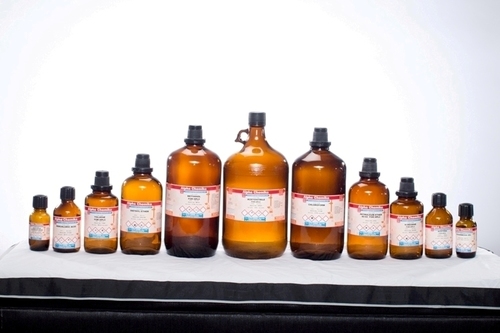
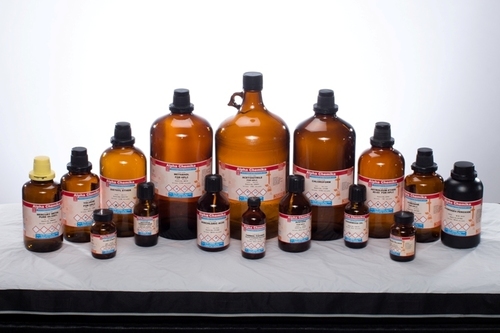
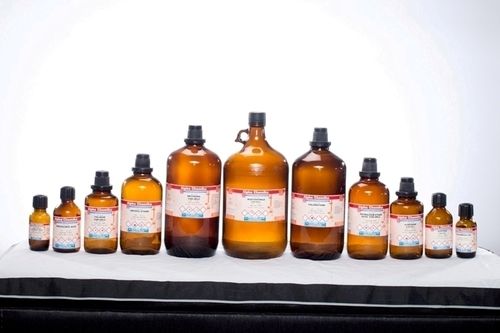
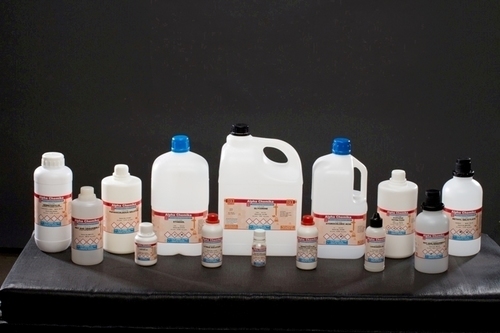
This chemical is used in resins and fragrances. We have reached the pinnacle of success and earned a name as an eminent organizations engaged in offering Acetophenone. At our sound processing unit, we process this chemical using best quality compounds. It is used for the synthesis of many pharmaceuticals, for example pyrrobutamine, dextropropoxyphene, trihexyphenidyl, pridinol, aspaminol and more. Clients can avail this Acetophenone from us in different quantity packaging options.
Features:
CERTIFICATE OF ANALYSIS
| Name Of Item : ACETOPHENONE |
| Formula : C6H5CO.CH3 | |
| M.W. : 120.15 |
| Batch No. : A0078 | |
| CAS NO. : 98-86-2 |
|
| Cat. No. : AL0062 02500 |
| | | | |
|
|
|
|
|
|
|
|
|
|
| Type Of Test | Standard |
| Observed |
|
|
|
|
|
| Description | A clear colorless liquid |
| A clear colorless liquid |
|
|
|
|
|
|
|
|
|
|
| Assay (GC) | Min. 99.0% |
| 99.45% |
| Wt. / ml at 20oC | 1.025 - 1.027g |
| 1.0252g |
| Freezing point | 18 - 20oC |
| 19oC |
| Refractive index n 20oC/D | 1.5325 - 1.5345 |
| 1.5345 |
|
|
|
|
|

Price:
Price 865 INR
Minimum Order Quantity : 250ML Liters
Molecular Weight : 100.12 g/mol
Smell : Other, Distinct, pungent odor
Storage : Other, Store in tightly closed container, in a cool, dry, and wellventilated place, away from sources of ignition
Structural Formula : CH3COCH2COCH3
Price 920 INR
Minimum Order Quantity : 250ml Liters
Molecular Weight : 100.12 g/mol
Smell : Other, Pleasant, sweet, pungent
Storage : Other, Store in a cool, dry, wellventilated area, away from sources of ignition
Structural Formula : CH3COCH2COCH3
Minimum Order Quantity : 100gm Kilograms
Molecular Weight : 240.21 g/mol
Smell : Other, Odorless or faint aroma
Storage : Other, Store in a cool, dry place, tightly closed container
Structural Formula : Refer to C14H8O4, 1,5Dihydroxyanthraquinone
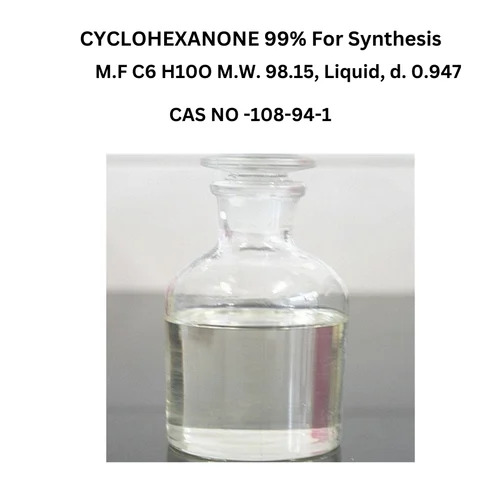
Price 645 INR / Liter
Minimum Order Quantity : 50 Liters
Molecular Weight : 98.15
Smell : Other, Characteristic odor
Storage : Other, Store in cool, dry place
Structural Formula : O=C1CCCCC1




|
 |
ALPHA CHEMIKA
All Rights Reserved.(Terms of Use) Developed and Managed by Infocom Network Private Limited. |

 Send Inquiry

 Send Inquiry


