


 English
 Spanish
 French
 German
 Italian
 Chinese (Simplified)
 Japanese
 Korean
 Arabic
 Portuguese



CERTIFICATE OF ANALYSIS
| Name Of Item : DIETHYLENE GLYCOL (digol)AR | Formula : O(CH2.CH2OH)2 |
| M.W. : 106.12 | Batch No. :D0184 |
| CAS NO. : 111-46-6 | Cat. No. : AL1755 02500 |
| Date Of Mfg. : | Date of Analysis : |
| Type Of Test | Standard | Observed |
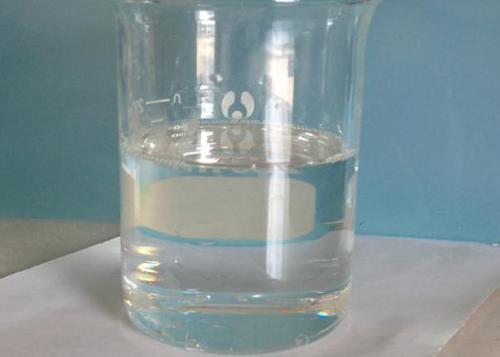
| Description | Clear colorless viscous liquid | Clear colorless viscous liquid |
| Assay (Min. by GC) | 99.00% | 99.71% |
| Wt /ml at 20C | 1.115 - 1.117g | 1.115g |
| Freezing point | Not less than -9C | -11C |
| Refractive index | 1.446 - 1.447 | 1.446 |
| Water | <0.2% | 0.1% |
| Sulphated ash | <0.01% | <0.01% |
| Copper (Cu) | <0.00005% | 0.00004% |
| Iron (Fe) | <0.00005% | <0.00005% |
| Lead (Pb) | <0.00005% | <0.00005% |
Results : The above product complies with AR grade
Registered Under Small Scale Industries Maharashtra (India)

Price:
Price 725 INR
Minimum Order Quantity : 1 Gram
Purity(%) : 99%
Grade : Analytical Grade
Type : Industrial Lab Chemicals
Application : Biochemical research, enzyme assays, substrate for kinase reactions
Price 5358 INR / Gram
Minimum Order Quantity : 500 Grams, ,
Purity(%) : 98%
Grade : Laboratory Grade
Type : University Lab Chemicals
Application : Intermediate in organic synthesis, flavor and fragrance formulations
Price 629 INR / Gram
Minimum Order Quantity : 500 Grams, ,
Purity(%) : 99%
Grade : Laboratory Grade
Type : University Lab Chemicals
Application : Industrial, Laboratory reagent, Glass production, Semiconductor industry
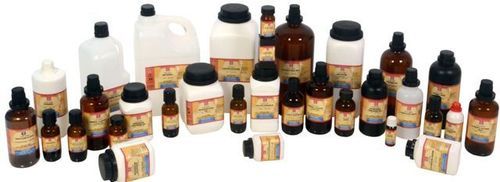
Price 1374 INR / Milliliter
Minimum Order Quantity : 500 Milliliters
Purity(%) : 99%
Grade : Laboratory Grade
Type : University Lab Chemicals
Application : Laboratory, research, synthesis of pharmaceuticals and organic chemicals


|
 |
ALPHA CHEMIKA
All Rights Reserved.(Terms of Use) Developed and Managed by Infocom Network Private Limited. |

 Send Inquiry

 Send Inquiry


