Methyl thiocyanate About
LC4125 Methyl thiocyanate
for synthesis
Order number Packaging Quantity Price
AC31125 Glass bottle 50 ml 15.48
Product information
Synonyms Thiocyanic acid methyl ester
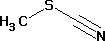
Hill Formula C2H3NS
Chemical formula CH3SCN
HS Code 2930 90 99
EC number 209-134-6
Molar mass 73.12 g/mol
Storage Store below +15C.
CAS number 556-64-9
Chemical and physical data
Solubility (20 C) practically insoluble
Melting point -5 C
Molar mass 73.12 g/mol
Density 1.07 g/cm3 (20 C)
Boiling point 131 C
Vapor pressure 16.1 hPa (25 C)
Flash point 38 C
Refractive index 1.4745 (15 C, 589 nm)
Safety information
R Phrase R 10-25-36/38
Flammable.Toxic if swallowed.Irritating to eyes and skin.
S Phrase S 23-26-37-45
Do not breathe vapour.In case of contact with eyes, rinse immediately with plenty of water and seek medical advice.Wear suitable gloves.In case of accident or if you feel unwell, seek medical advice immediately (show the label where possible).
Categories of danger flammable, toxic, irritant
Hazard Symbol
Storage class 3 Flammable Liquids
WGK WGK 3 highly water endangering
Disposal 9
Carcinogenic compounds and flammable compounds labelled "Highly toxic" or "Toxic": container F. Alkyl sulfates are carcinogenic; Take particular care to avoid inhalation and skin contact. To neutralize alkyl sulfates, add dropwise (from a dropping funnel) to concentrated ice-cool Ammonia solution (Cat.No. 105426) with vigorous stirring. Before placing in container D, check the pH with pH Universal indicator strips (Cat.No. 109535).
Transport information
Declaration (transport by sea) IMDG-Code UN 3080 ISOCYANATES, TOXIC, FLAMMABLE, N.O.S.(METHYLTHIOCYANATE), 6.1 (3), II
Declaration (transport by air) IATA-DGR UN 3080 ISOCYANATES, TOXIC, FLAMMABLE, N.O.S.(METHYLTHIOCYANATE), 6.1 (3), II
Toxicological data
LD 50 oral LD50 rat 60 mg/kg
Specifications
Assay (GC, area%) 96 %
Density (d 20 C/ 4 C) 1.072 - 1.074
Identity (IR) passes test
Key Features and BenefitsMethyl thiocyanate offers high purity (96%) and is stable under standard storage conditions, ensuring reliable results in laboratory and industrial settings. Its versatility in application, particularly in the synthesis of pharmaceuticals and fine chemicals, makes it a valuable reagent. The chemical's clear to pale yellow appearance aids in ease of visual inspection during use.
Safe Handling and Storage GuidelinesDue to its toxicity and strong odor, methyl thiocyanate must be stored in a cool, dry, and well-ventilated space, away from heat and ignition sources. Proper packaging, typically in bottles or drums, ensures safety during storage and handling. Adhering to recommended storage conditions preserves both the stability and shelf life of the product, which is typically two years.
FAQ's of Methyl thiocyanate:
Q: How should methyl thiocyanate be safely handled in the laboratory?
A: Methyl thiocyanate must be handled with appropriate safety precautions, including the use of gloves, eye protection, and working within a well-ventilated fume hood. Avoid inhalation, ingestion, and skin contact due to its toxic nature.
Q: What is the recommended storage process for methyl thiocyanate?
A: Store methyl thiocyanate in tightly sealed bottles or drums, placed in a cool, dry, and well-ventilated area. Keep it away from heat sources, direct sunlight, and ignition sources to maintain chemical stability and ensure safety.
Q: Where is methyl thiocyanate commonly used?
A: It is commonly used in pharmaceutical research as an intermediate, as well as in chemical synthesis and laboratory applications. Its high purity and chemical stability make it suitable for industrial laboratory environments.
Q: What are the hazardous properties of methyl thiocyanate, and how can exposure be minimized?
A: Methyl thiocyanate is toxic if inhaled, ingested, or absorbed through the skin, and emits a strong, unpleasant odor. Strict adherence to personal protective equipment guidelines and proper ventilation is crucial to minimize exposure risks.
Q: When does methyl thiocyanate require replacement or disposal?
A: Replace or dispose of methyl thiocyanate if it has surpassed its two-year shelf life, if contamination is suspected, or if the container shows any damage or leakage. Always follow institutional and regulatory protocols for disposal.
Q: What is the benefit of using methyl thiocyanate with 96% purity in chemical research?
A: Its high purity ensures consistent and accurate experimental outcomes, reducing impurities that might interfere with synthesis or analysis processes, thus enhancing the reliability of research results.


 English
 Spanish
 French
 German
 Italian
 Chinese (Simplified)
 Japanese
 Korean
 Arabic
 Portuguese








 Send Inquiry


 Send Inquiry


