NIGROSINE (WATER SOLUBLE) FOR MICROSCOPY About
Chemical Specification :-
- Synonym : Acid black 2
- Molecular Formula : C22H14N6Na2O9S2
- Molecular Weight : 616.49
- CI : 50420
- CAS Number : 8005-03-6
- Colour Index Number : 50420
- MDL Number : MFCD00044681
- Suitability : Suitable for cell culture
- Chemical Family : Aniline derivatives
- Classification : Acid Dye
- pH : 9 10
- ASH : 17% max
Application :-
Used as a viable cell staining agent especially in steam cell biology
Reliable Staining for MicroscopyNigrosine provides consistent and vivid contrast, making it ideal for negative staining in microscopy and biological laboratories. Its high purity enhances precision, yielding clear visualization of samples, especially for highlighting cell outlines and backgrounds. As a trusted stain, it supports both teaching and research, ensuring reproducible results in routine and critical analyses.
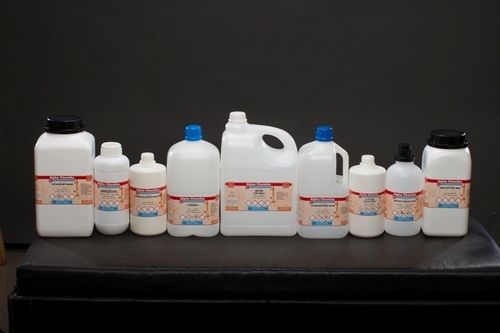
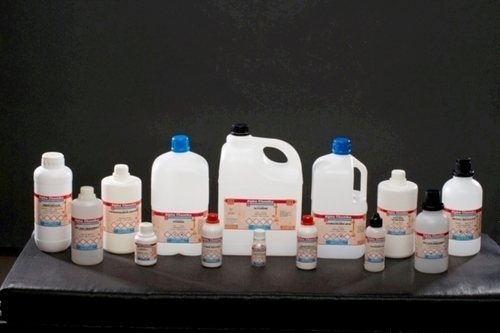
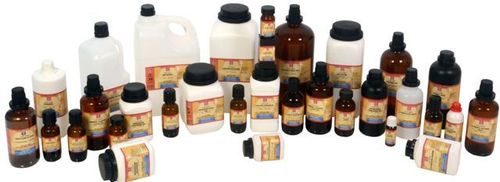
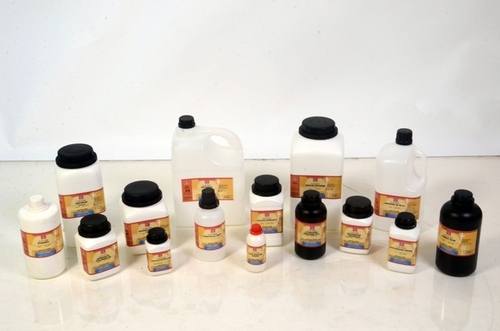
Optimal Storage and LongevityWith a shelf life of up to 36 months, Nigrosine remains stable when stored in a tightly closed container, in a cool, dry place, and away from direct light. The packaging, available in plastic or glass bottles, ensures protection against environmental factors, maintaining the stain's integrity for consistent laboratory outcomes throughout its usage period.
FAQ's of NIGROSINE (WATER SOLUBLE) FOR MICROSCOPY:
Q: How is Nigrosine (Water Soluble) used in microscopy?
A: Nigrosine is primarily used for negative staining in microscopy, where it provides contrast by staining the background rather than the specimen. Laboratory professionals often mix it with water to create a working solution and apply it to biological samples to highlight cell outlines or microorganisms without staining the cells directly.
Q: What are the benefits of using Nigrosine as a microscopy stain?
A: Nigrosine's high purity and water solubility offer sharp, reliable staining for accurate microscopy results. Its non-hazardous nature and stability under normal laboratory conditions make it safe and easy to handle, supporting both routine and advanced biological investigations.
Q: Where should Nigrosine be stored to ensure maximum shelf life?
A: To maintain Nigrosine's stability and effectiveness, store the powder in a tightly closed container, in a cool and dry environment, and protected from direct light. Proper storage extends its shelf life up to 36 months.
Q: What is the recommended process for preparing a Nigrosine staining solution?
A: Dissolve the required amount of Nigrosine powder in distilled water to achieve the desired concentration (commonly 2%). Stir until fully dissolved. Use the freshly prepared solution for immediate results, and handle according to standard laboratory safety protocols.
Q: When should Nigrosine be used in laboratory applications?
A: Nigrosine is ideal for negative staining protocols in biological laboratories, educational settings, and research facilities. It should be used when strong background contrast is needed to visualize cellular structures or microorganisms without internal staining.
Q: What is the advantage of Nigrosine's non-hazardous classification?
A: As Nigrosine is classified as non-hazardous under normal use, it reduces health and environmental risks in laboratory settings. This allows for safer handling, transport, and disposal compared to other staining agents.


 English
 Spanish
 French
 German
 Italian
 Chinese (Simplified)
 Japanese
 Korean
 Arabic
 Portuguese










 Send Inquiry

 Send Inquiry


