


 English
 Spanish
 French
 German
 Italian
 Chinese (Simplified)
 Japanese
 Korean
 Arabic
 Portuguese



| Order number | Packaging | Quantity | Price |
| AC27203 | Plastic bottle | 5 g | 28.125 |
| Product information | |
| Grade | BP,Ph Eur,USP |
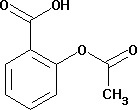
| Synonyms | Acetoxybenzoic acid |
| Hill Formula | C9H8O4 |
| HS Code | 2918 22 00 |
| EC number | 200-064-1 |
| Molar mass | 180.15 g/mol |
| CAS number | 50-78-2 |
| Chemical and physical data | |
| Ignition temperature | 500 C DIN 51794 |
| Solubility | 3.3 g/l (20 C) |
| Melting point | 136 C |
| Molar mass | 180.15 g/mol |
| Density | 1.35 g/cm3 (20 C) |
| Bulk density | 600 - 750 kg/m3 |
| pH value | 3.5 (2.5 g/l, H2O, 20 C) |
| Flash point | 250 C DIN 51755 Part 1 |
| Safety information | |
| R Phrase | R 22 Harmful if swallowed. |
| Categories of danger | harmful |
| Hazard Symbol |  Harmful Harmful |
| Storage class | 10 - 13 Other liquids and solids |
| WGK | WGK 1 slightly water endangering |
| Disposal | 3 Relatively unreactive organic reagents should be collected in container A. If halogenated, they should be collected in container B. For solid residues use container C. |
| Toxicological data | |
| LD 50 oral | LD50 rat 1124 - 1228 mg/kg |
| Specifications | |
| Assay - Ph.Eur., calculated on dried substance | 99.5 - 101.0 % |
| - USP, calculated on dried substance | 99.5 - 100.5 % |
| Identity | passes test |
| Appearance of solution (10 %; ethanol 96 %) | passes test |
| Substances insoluble in sodium carbonate | 0.05 % |
| Salicylic acid | 0.05 % |
| Chloride (Cl) | 0.01 % |
| Sulphate (SO4) | 0.02 % |
| Heavy metals (as Pb) | 0.001 % |
| Related substances (HPLC) | passes test |
| Residual solvents (Ph. Eur./USP/ICH) of class 3 | 0.5 % |
| Other residual solvents (Ph. Eur./USP/ICH) | excluded by production process |
| Readily carbonisable substance | passes test |
| Sulfated ash | 0.05 % |
| Loss on drying | 0.5 % |
| Identity (IR) | passes test |

Price:
Minimum Order Quantity : 25 Gm, Kilograms
Purity(%) : 99%
Grade : LR Grade
Type : University Lab Chemicals
Appearance : Light Yellow to White Powder
CAS No : 3073878

Minimum Order Quantity : 500 Grams
Purity(%) : 98%
Grade : Industrial Grade
Type : Other, Inorganic Salt
Appearance : White Crystalline Powder
CAS No : 141537
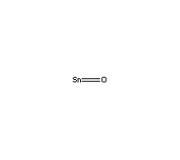
Purity(%) : 99.0%
Grade : Industrial Grade
Type : Other, STANNOUS OXIDE
Appearance : Black Powder
CAS No : 21651194
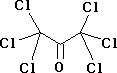
Minimum Order Quantity : 500 Milliliters
Purity(%) : 99.99
Grade : Industrial
Type : Industrial Lab Chemicals



|
 |
ALPHA CHEMIKA
All Rights Reserved.(Terms of Use) Developed and Managed by Infocom Network Private Limited. |

 Send Inquiry

 Send Inquiry


